
Accessibility and Archives: A celebration of Jean Stone MBE (1933-2019)
In this guest post for Women’s History Month Emily Toettcher of the National Paralympic Heritage Trust shares an archive project based on the records of an advocate for disability sport.
Jean Marshall Stone MBE was a remarkable woman, a pioneer in the Paralympic Movement and in the development of disability sport. Whilst she is fondly remembered by colleagues, her story had not been fully recorded for posterity.
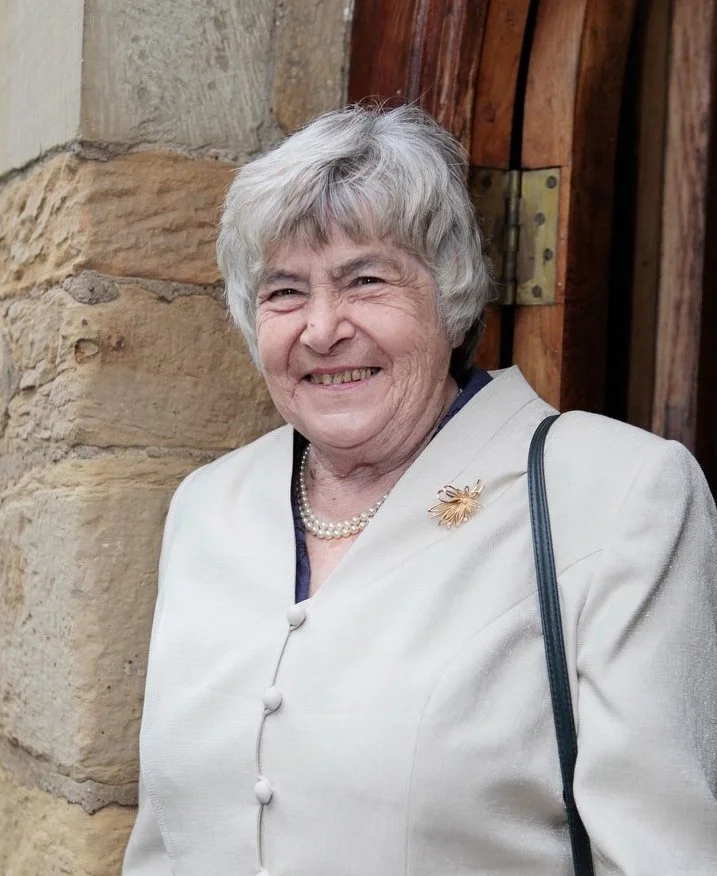
Jean Stone
In March 2025, the National Paralympic Heritage Trust began a project to catalogue and share Jean’s extensive collection of records, which document a career that took her all over the world. The project is supported by an ‘Archives Revealed’ grant, a partnership programme funded by the National Lottery Heritage Fund, the Pilgrim Trust, the Wolfson Foundation and The National Archives. The exhibition and engagement work which followed is supported by Heart of Bucks.
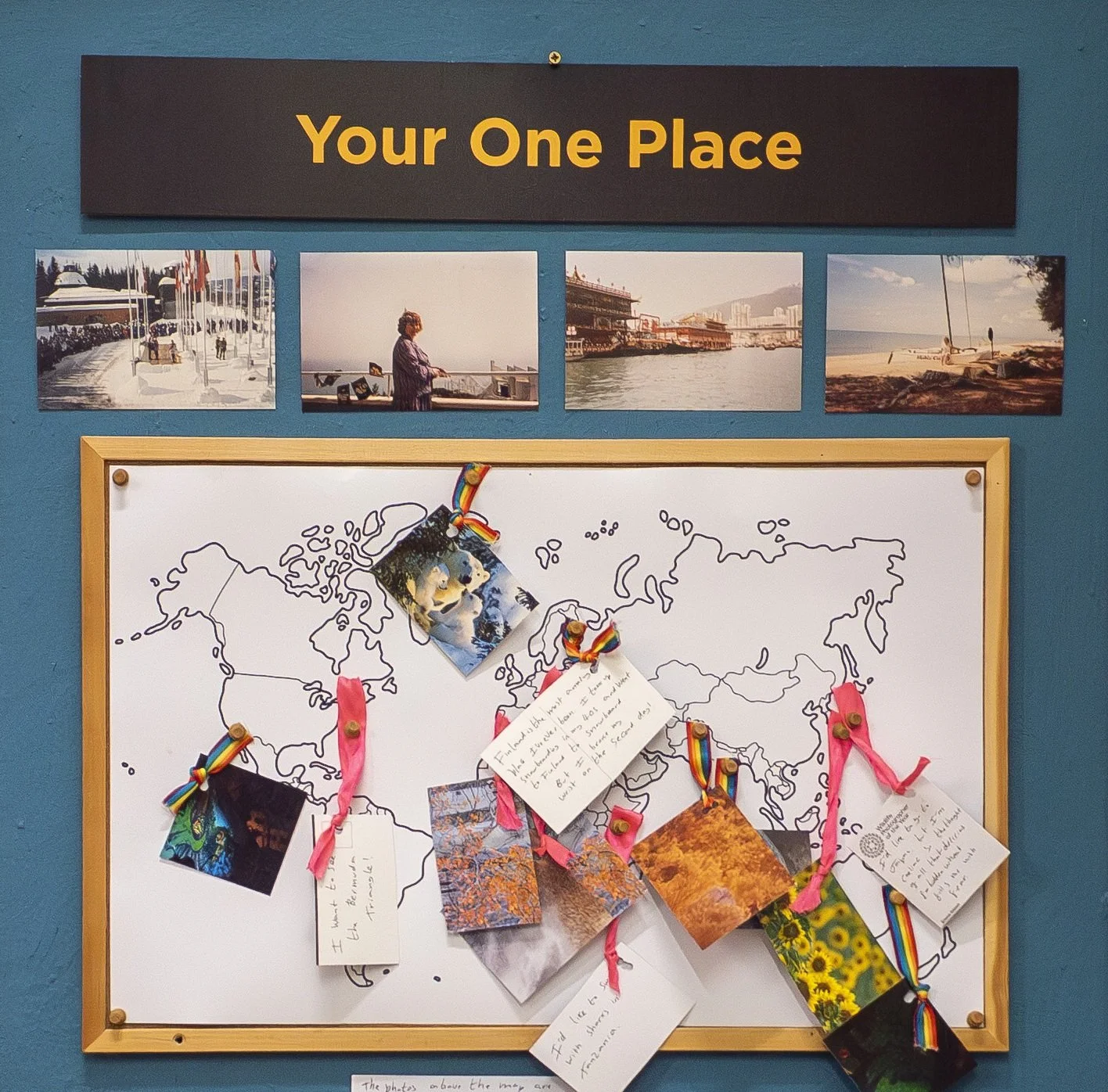
Jean travelled extensively throughout her career, contributing to the organisation of Paralympic Games, Commonwealth Paraplegic Games and other sporting events. There is a wealth of travel photos in her archive, some of which are displayed here with a map of the world. Visitors to the exhibition are invited to add 'their one place' about somewhere in the world that is significant to them.
Celebrating influential women at the National Paralympic Heritage Trust
The National Paralympic Heritage Trust (NPHT) was established in 2015 to preserve, celebrate and share our inspirational local and national Paralympic heritage. NPHT is an accredited museum, with a heritage centre in Stoke Mandeville in Buckinghamshire, the birthplace of the Paralympic Movement.
NPHT’s work had initially focused on cataloguing collections on the early Games from the 1940s, much of which was centred around the visionary work of Sir Ludwig Guttmann at Stoke Mandeville. Now, NPHT is working to document the Games’ later development, including the role of influential women in the Paralympic Movement.
The archive of Jean Stone MBE
Jean Stone MBE (1933-2019) had a career spanning five decades from the 1950s. Born in Fife, her profession as an occupational therapist for the Thistle Foundation, working with disabled servicepeople, gave her a sound understanding of the benefits of sport in disabled people’s lives.
Jean made a significant contribution to developing disability sport in Scotland and was a founding member of the Scottish Paraplegic Association and the Scottish Sports Association for the Disabled. She played a pivotal role in the Commonwealth Paraplegic Games of 1970 and 1974 and in multiple Paralympic Games from 1960 to the 2000s. This work took her all over the world and is recorded in the many personal photographs she took on her travels and kept in her archive.
Jean was subsequently awarded the 'Paralympic Order', the highest honour in Paralympic sport, in honour of her incredible contribution to the Paralympic Movement.
Jean donated her personal collection to WheelPower, British Wheelchair Sport, for whom she worked for many years from the 1980s, and volunteered for after her retirement. She established two major events for Wheelpower, the National Junior Games and the Inter Spinal Unit Games, which continue to benefit young people and newly paralysed people today. Wheelpower has loaned Jean’s archive to the NPHT for this project.
Engaging people in cataloguing Jean’s archive
In July 2025 a project archivist was appointed to manage the cataloguing of Jean’s collection. A team of 14 volunteers were recruited and trained to work alongside her. Some of these were existing volunteers, who had worked on cataloguing projects before, but most of them were new to NPHT and archives work. They range in age from 16 to over 60, and some of them identify as disabled or neurodiverse.
Over the last nine months the team has listed 97 boxes of documents, photographs and objects preserved by Jean, offering a unique insight into her role within the Paralympic Movement. Now the project is coming to an end, it’s hoped that the volunteers will take on other collections work for NPHT.
The archive will be cared for by Buckinghamshire Archives and will be searchable via their catalogue.
Creative responses
The work on Jean’s archive was always more than listing and cataloguing; NPHT wanted to share and celebrate Jean’s legacy with a wider audience. With the support of additional funding from local foundation Heart of Bucks, disabled artist Naomi Westerman was appointed to work with the local community to explore and respond to Jean’s archive.
In early 2026 a series of workshops took place with young women from a local SEND school, and with an intergenerational group of women, made up of project volunteers, staff and young people on placement with NPHT, some of whom are disabled or neurodiverse.
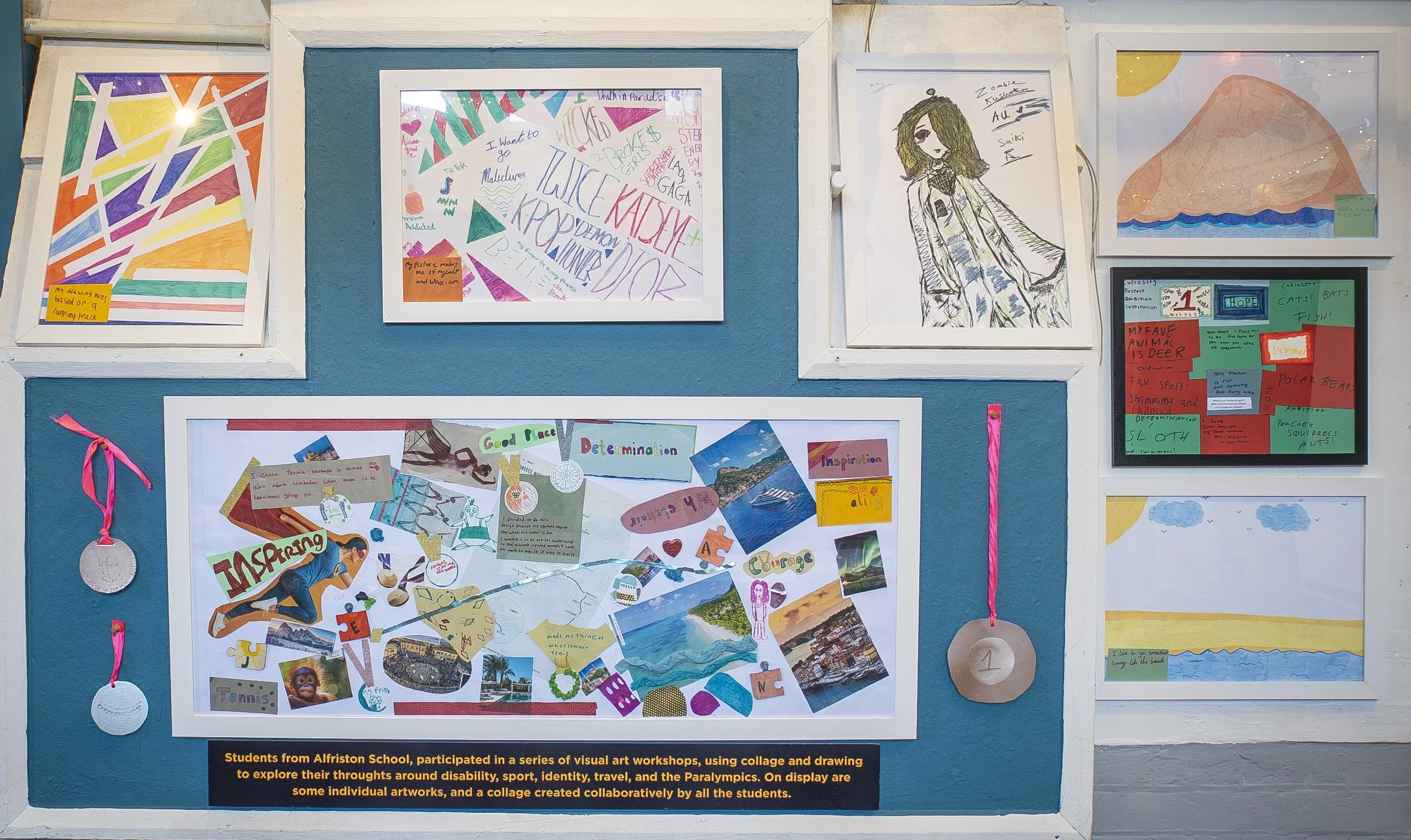
Artwork produced by SEND young people from Alfriston School, including a collaboratively produced collage. The group explored themes of disability, sport, travel, identity and the Paralympics.
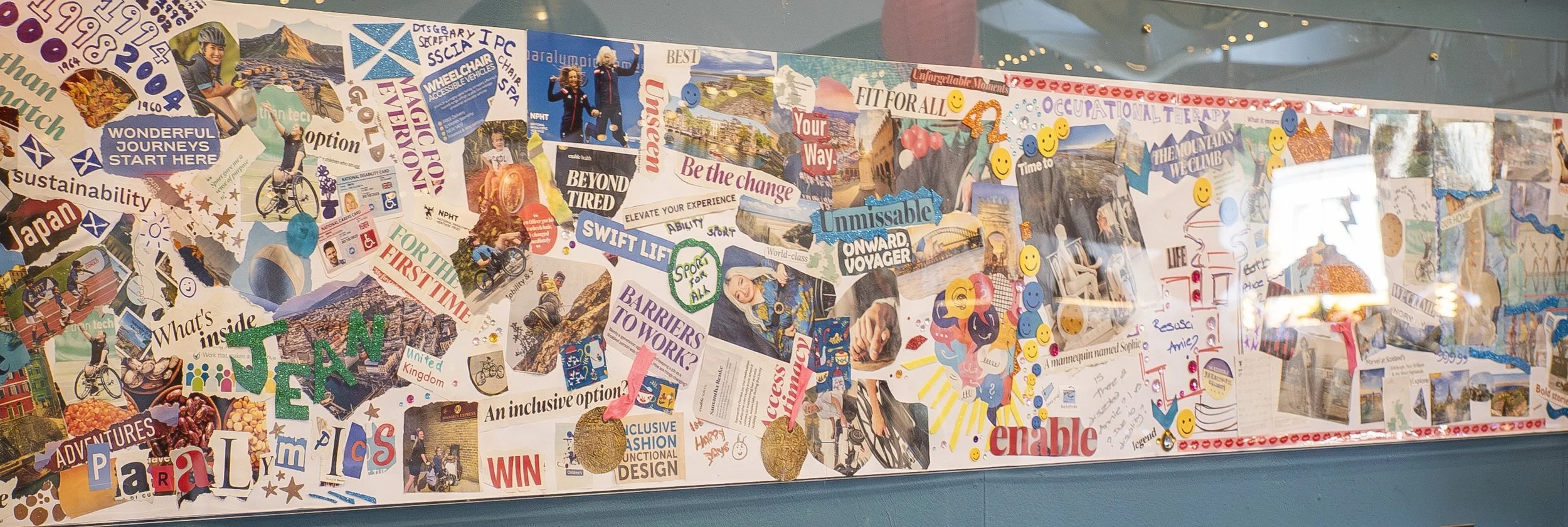
Collage produced by a multigenerational group of NPHT staff and volunteers, reflecting on what Jean Stone MBE and her legacy meant to them. It seeks to honour Jean's Scottish heritage, her work within the Paralympic Movement, her travels abroad, and also picks up on the themes of sport, swimming and water as seen elsewhere in the exhibition.
Naomi encouraged both groups to think about Jean’s work, as evidenced in items she selected from the archive. The group explored: ideas of travel and how that was and is difficult as a disabled person; sports and their experiences of participating; the complexities of the language they encountered in the archive and how that made them feel; and reflections on their own identity. Naomi’s inclusive, creative practise enabled all participants to contribute in a meaningful way.
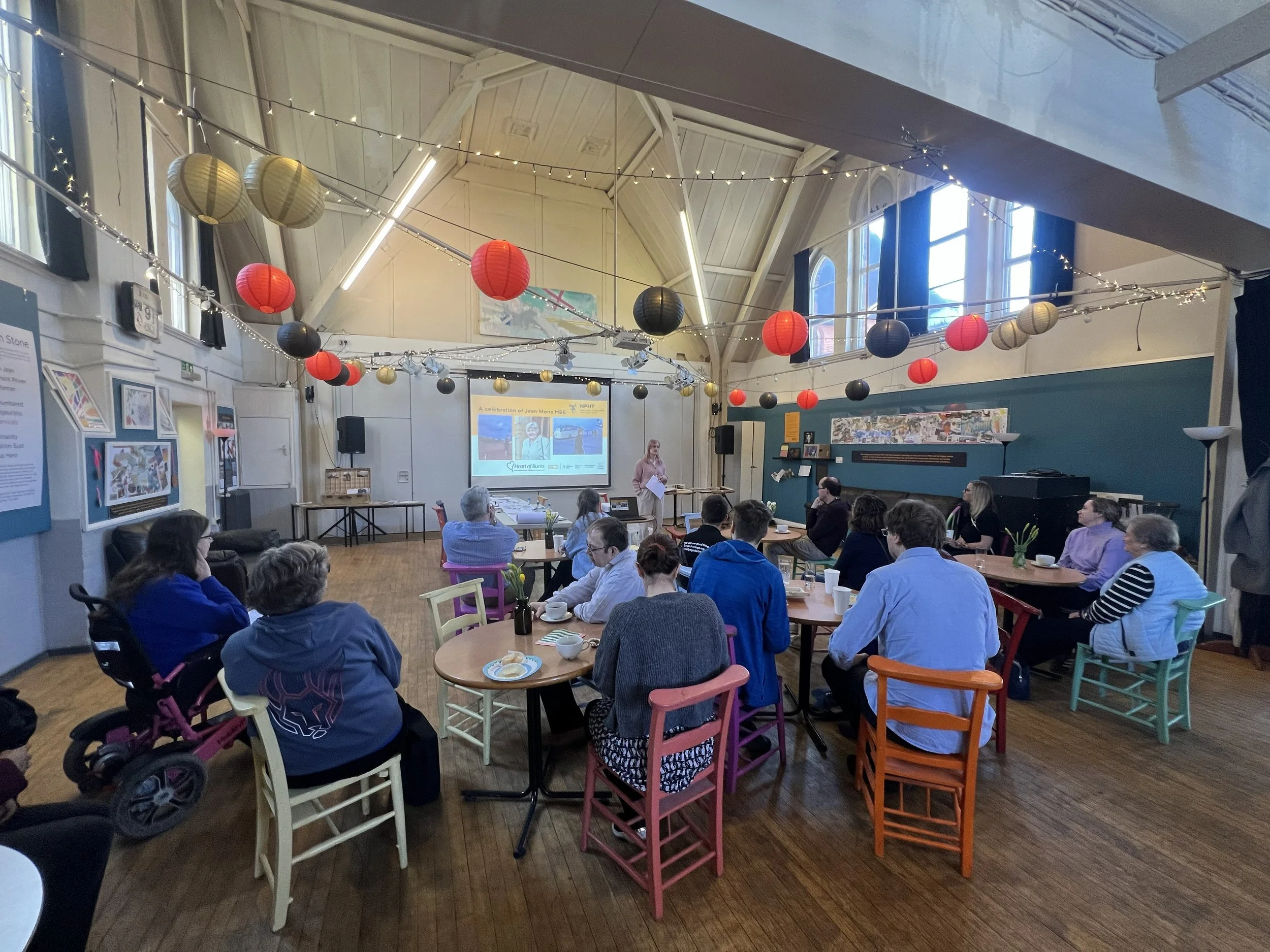
Project Manager, Kat Mace, thanking the participants at the celebration event on 18th March
The workshops resulted in an exhibition, hosted by Wycombe Arts Centre in Buckinghamshire. Opening in March for women’s history month, it showcases the creative responses from the group, and includes mixed media pieces, collage and photography. The project culminated with a celebration event in mid-March for all the participants, and included a talk from local Paralympian Mari Durward-Akhurst, who also contributed to the exhibition.
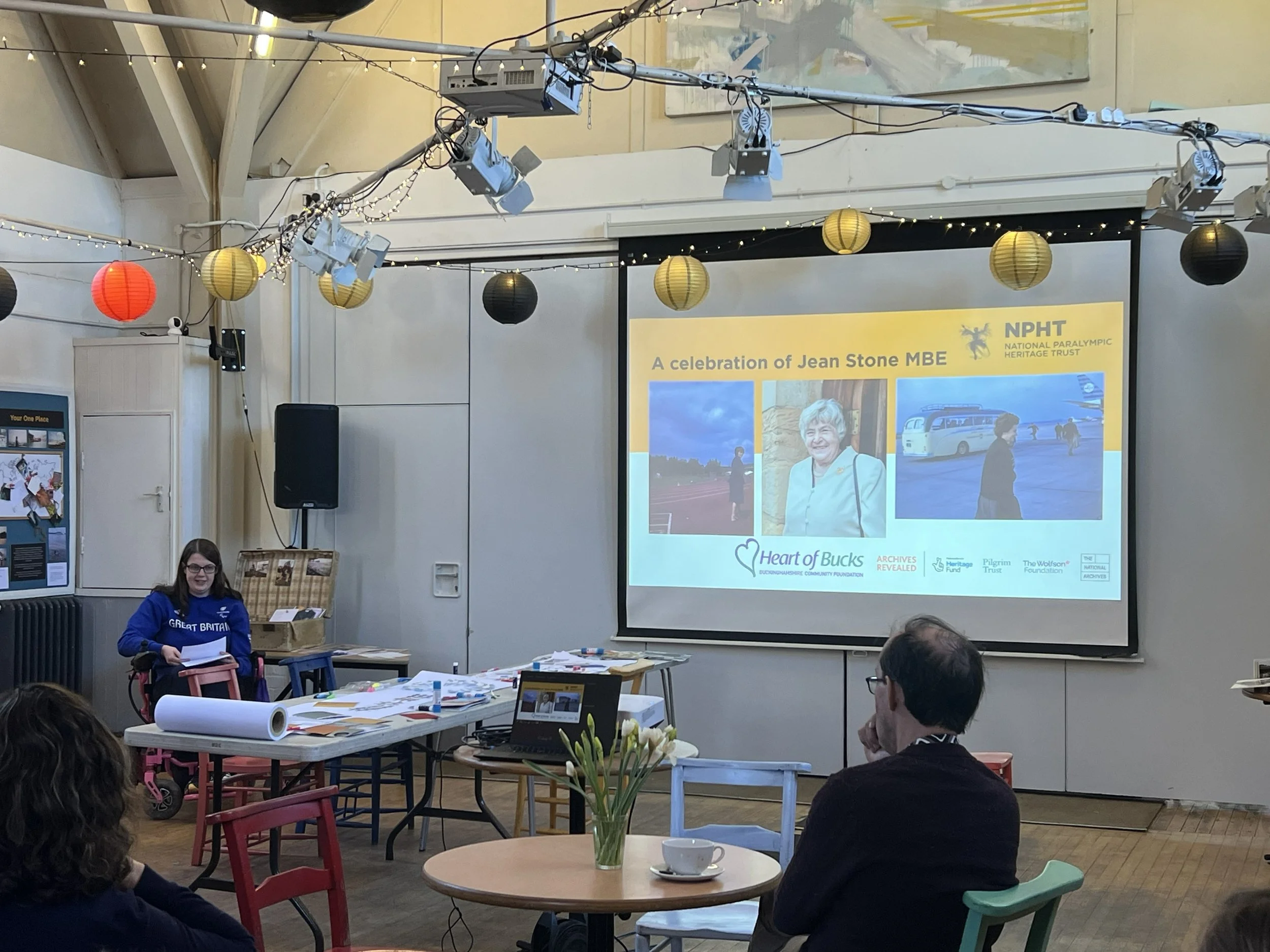
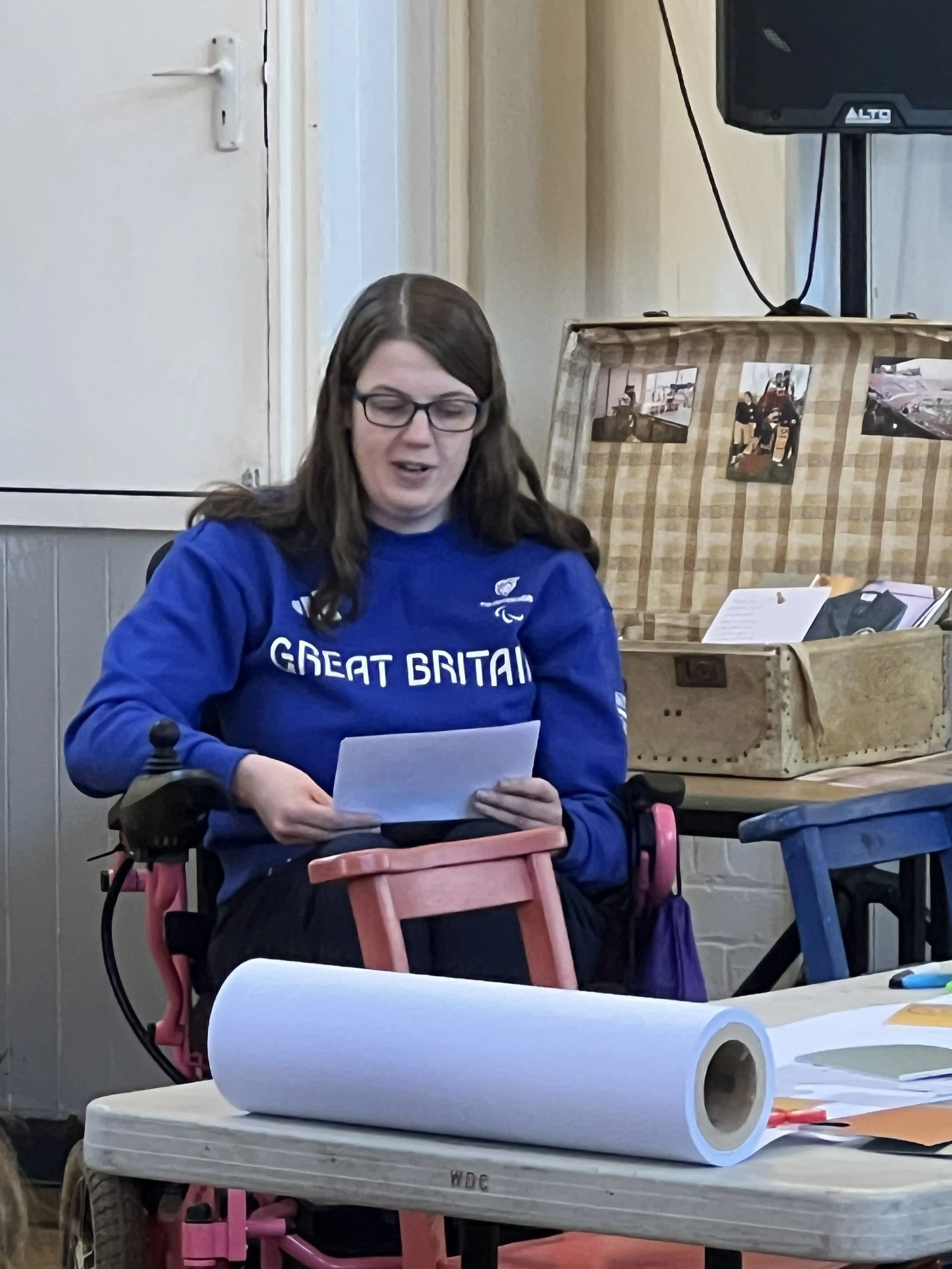
Reflections from local Paralympian Mari Duward-Akhurst on Jean's legacy. Mari also took part in the creative workshops.
Mari noted:
"When I look back at my own journey, from therapy riding as a child, to sitting on a Paralympic podium. I realise that journeys like mine are only possible because people like Jean built those opportunities. Her legacy lives on in every athlete who discovers sport for the first time.
It lives on in every young person who realises that their disability does not define what they can achieve and it lives on in places like Stoke Mandeville, where the Paralympic movement began and continues to inspire athletes today".
NPHT will continue to share Jean’s archive and the groups’ creative responses through social media posts and content on their website. In April Naomi will be running a workshop for young people and NPHT plans to move the exhibition to Aylesbury for a second run, to reach a wider audience.
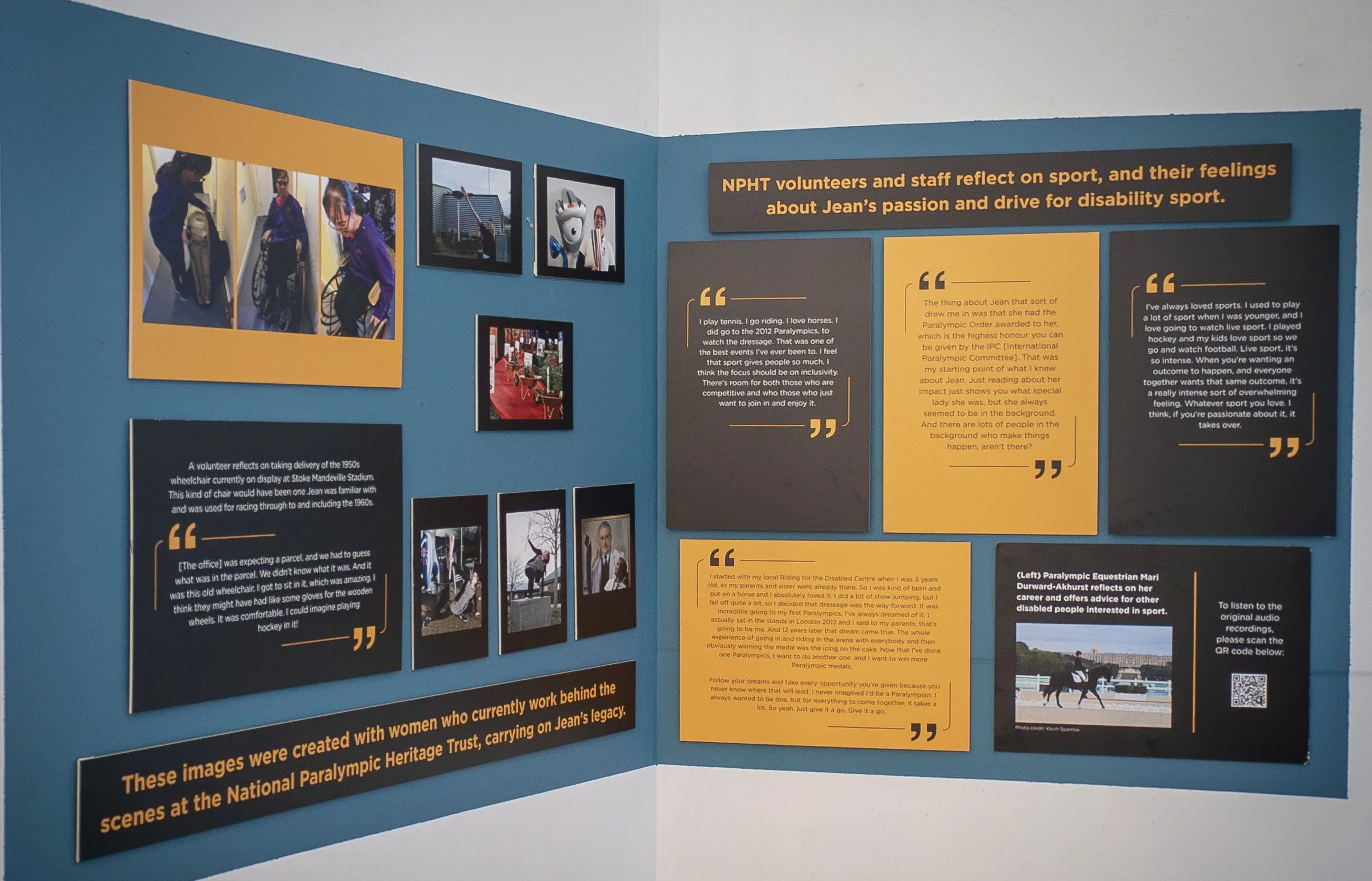
Creative responses from artist Naomi Westerman and the NPHT team, their reflections on sport and Jean's contributions to disability sport
Reflecting and next steps
Our team found that Jean’s archive didn’t reveal everything we wanted to find out about her life. Whilst her records of her work are thorough, piecing together a picture of her as a person has been challenging. As with most collections, it’s like a puzzle with some of the pieces missing.
Nevertheless, Jean was meticulous in her record keeping, cutting out newspaper articles and sticking them into neatly kept scrapbooks, dating them. What became apparent through the items Jean preserved was her passion and dedication towards celebrating disabled athletes, and for access and inclusion.
There are also records and photographs of others who were integral to these early years, such as Joan Scruton MBE, another woman at the centre of the Paralympic Movement, whose role we hope to explore in more detail going forwards. We now have a super team of volunteers who can help us on this journey.
As one of our volunteers said, ‘It seems Jean took it upon herself to be the unofficial archivist’ of the early Paralympic Movement, long before the NPHT existed, and we are incredibly lucky that she did.
Guest posts are welcome in this series.