
Nomination:
Based in Ormskirk, West Lancashire, Edge Hill University Archive and Special Collections is a relatively young service, established in 2019 despite the modern University’s roots going back to 1885 when it opened in Liverpool as the country’s first non-denominational teacher training college for women. Beginning with just one part-time, permanent Archivist (Dan Copley), the archive team has at various times also included a student intern, a fixed term project archivist post, support from two library staff (Rachel Bird and Dee McMahon) for a day and a half per week, various student volunteers and, since September 2024, our Archive Apprentice Aimy Stevens has been part of the team alongside Dan.
The past 18 months have been an exciting time for the archive, with the reach of the service expanding across the country and even internationally. 2025 saw a lot of our work focussed on the late, Liverpool-born, internationally acclaimed filmmaker Terence Davies, whose archive we are lucky enough to hold, having been donated by The Terence Davies Estate in 2024. The British Film Institute approached us as they were planninga major retrospective of all of Terence’s films in London, curated by BFI Chief Executive Ben Roberts, and asked us to provide an exhibition of items from the archive. We had only recently received the archive and barely begun working with it, so we were a little apprehensive about how successful this would be. However, it was a delight and privilege to work with the BFI and the exhibition became a key part of the season, with our Project Archivist (Sophie Smith) and Dan also speaking about the collection at one of the events organised as part of the season. It was a pleasure to be part of an event that also included various producers who had worked with Terence and the donors of the collection, the Terence Davies Estate (represented by James Dowling and John Taylor).
Sophie led on the curation of the exhibition, titled Dear Bud: The Creative Mind of Terence Davies, and selected items that covered the entire scope of Davies’s career. The exhibition had a private view launch event attended by film industry figures, colleagues and friends of Terence, with Sophie taking them on a tour of the exhibition, for which we even managed to get Terence’s actual office desk and recreated his working environment, complete with posters, pens, pencils, glasses and all the other things he usually kept on his desk, right down to his lens cleaner and collection of plastic rulers (13 in total!).
A student film of Terence’s, Boogie, was also discovered in the archive and after it was kindly digitised by the North-West Film Archive, the film received its world premiere as part of the season. It has since gone on to be screened as part of a Terence Davies retrospective at the Toronto International Film Festival. The archive team also collaborated with the Museum of the Moving Image in New York to provide images of items from the archive and contextual information for their Terence Davies season in September 2025. In addition, images of items from the archive were used to illustrate Bloomsbury’s newly published editions of Terence’s screenplays. A gallery of items from the archive were also added as an extra on the BFI’s remastered blu-ray release of Terence’s film The House of Mirth(2000), starring Gillian Anderson, with the archive team receiving a lovely thank you and credit in the blu-ray booklet, making us all feel just a little bit famous – even if only for a moment! We also saw some fabulous coverage of the exhibition and the discovery of Boogie in national newspapers, including The Times and The Guardian.
In November 2025, we were invited to be involved in a season of Terence’s films being screened at HOME, Manchester. Sophie and Dan appeared alongside John Taylor, Terence’s personal manager, Executive Producer on Benediction (2021) and representative of the Terence Davies Estate, to speak about items from the archive in relation to four films selected by each of us and host, Rachel Hayward, Head of Film Strategy, HOME. It was lovely to be able to highlight items from the archive, sharing them with an enthusiastic audience and discuss them on stage with John’s wonderful insights into Terence’s work and life.
The cataloguing of the Terence Davies Archive is still ongoing, but the aim is to have it launched and ready for public access towards the end of 2026, which also coincides with the 50th anniversary of Terence’s debut short film, Children(1976). Plans are currently underway for a funding application to hold events and screenings at Edge Hill’s Ormskirk campus, with displays of materials from the incredible archive collection.
Over the past 18 months, we have been actively finding ways to explore the early days of Edge Hill University and bring that period to life for researchers, staff and students. Dan has worked alongside academics at Edge Hill and Lincoln Bishop University to bring together archive services where they have collections relating to 19th century teacher training colleges for women and the researchers who work in this area. This is an under-researched area of history that can provide many insights into the social, cultural and political lives of young women during a period of seismic change for women in the UK. Our cross-university partnership were successful in applying for a British Academy grant and this will be used to employ a post-doctoral researcher to look at where relevant archive collections are, possible research connections, gaps in collections and opportunities for collaboration. Meanwhile, Edge Hill colleagues Dee and Rachel, with some support from Aimy, have been researching the lives of some of Edge Hill’s earliest students, discovering a history rich with pioneers, reformers, missionaries, suffrage and human rights campaigners. We have been using this research to engage with our students and sharing it with researchers. It has also formed the basis of a number of on-campus exhibitions and we have begun exploring ways to share this rich seam of information via our public archive catalogue. We also organised a symposium in Liverpool attended by archive staff that hold 19th century teacher training college collections and researchers from institutions looking at similar histories. This will form the basis of a network that will be able to collaborate and support research across different institutions.
In the past 18 months, work has begun with the collection of another major British film director, but this has been a little more complicated. At the heart of the collection are a series of journals covering four decades and often including, alongside creative work and information about film productions, highly sensitive personal information about living individuals. The archive team have been working closely with the family of the director (who also donated the archive) to work out how we can provide access to the collection for researchers without people having access to the personal information in it. Our solution is that we will be gradually digitising the journals and providing digital surrogates, with redactions, for researchers until various agreed closure periods expire, at which points archive users will be able to see the original journals. It’s a slow process, but that one that has been agreed through careful consideration and collaboration with the donors.
Although the core archive team is currently just two people, we are very proud of the work that has been achieved with such a small team and are so grateful to all the amazing colleagues and student volunteers who have been part of the team at various times and the brilliant organisations and individuals who have supported our work. The work of the past 18 months gives a wonderful foundation on which to continue to develop and expand both current work and push towards new, exciting projects and ambitions for the future.
Supporting evidence:
BFI’s Terence Davies season in partnership with Edge Hill University announcement: Announced: Terence Davies celebration including a complete retrospective | BFI
Linking in with the release of The House of Mirth on blu-ray, Marc David Jacobs from the BFI came to the archive to research the origins of some of Terence’s work and produced this article as a result: “I have been rather brutal with the text”: behind the scenes on Terence Davies’s art of adaptation | BFI
Boogie being screened at the Toronto International Film Festival: Distant Voices, Still Lives preceded by Boogie
Edge Hill University in conversation at HOME, November 2025: Terence Davies Archive – In Conversation with Edge Hill University — Explore the personal archive of one of Britain’s greatest filmmakers. | HOME
Images:
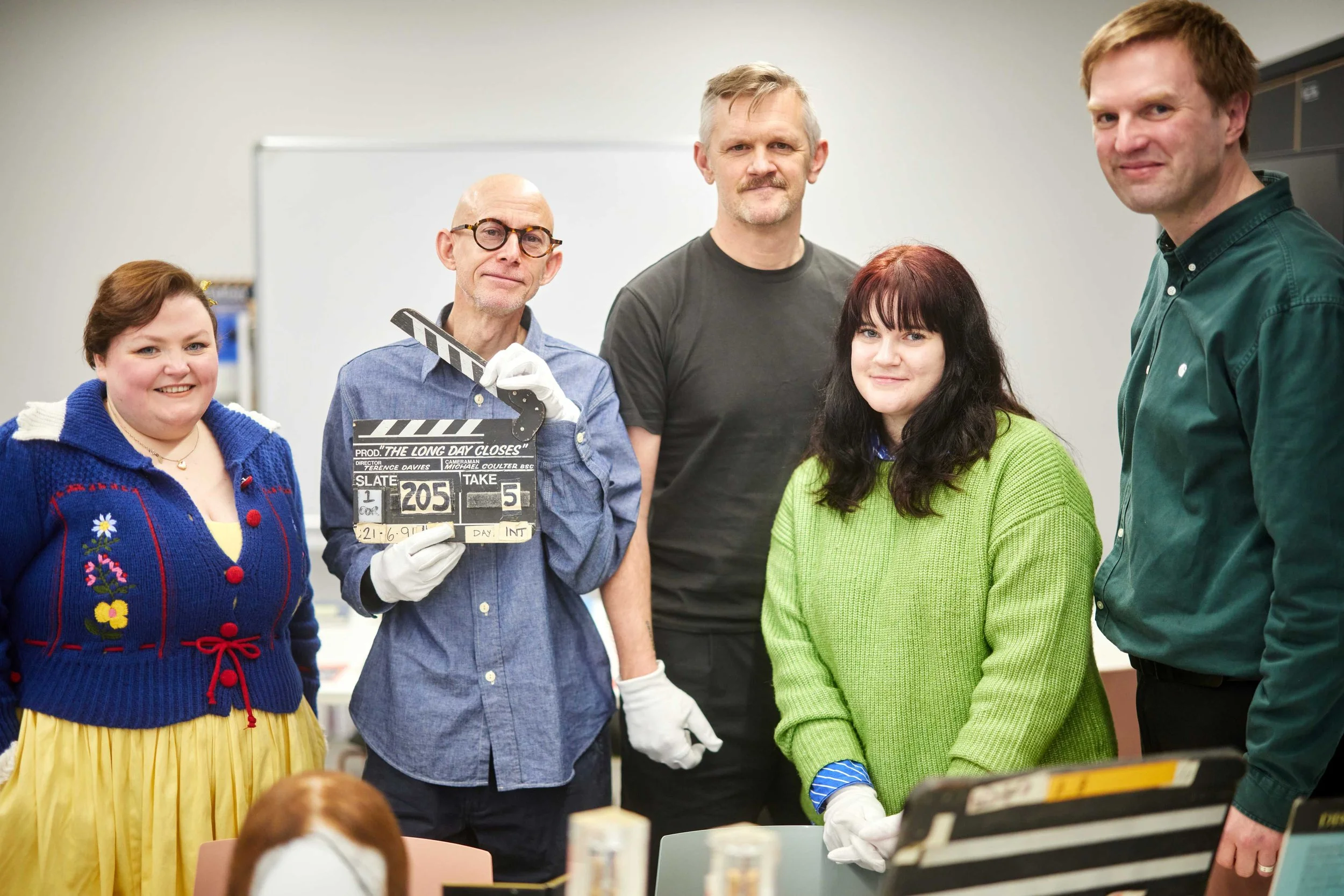
Image 1: BFI Staff visiting Edge Hill University to see the Terence Davies Archive, December 2024. Left to right: Sophie Smith, Jason Wood (Executive Director for Public Programmes and Audiences, BFI), Ben Roberts (Chief Executive, BFI), Kimberley Sheehan (Lead Programmer, BFI), Dan Copley. Photo: Mark Waugh (www.markwaugh.net)
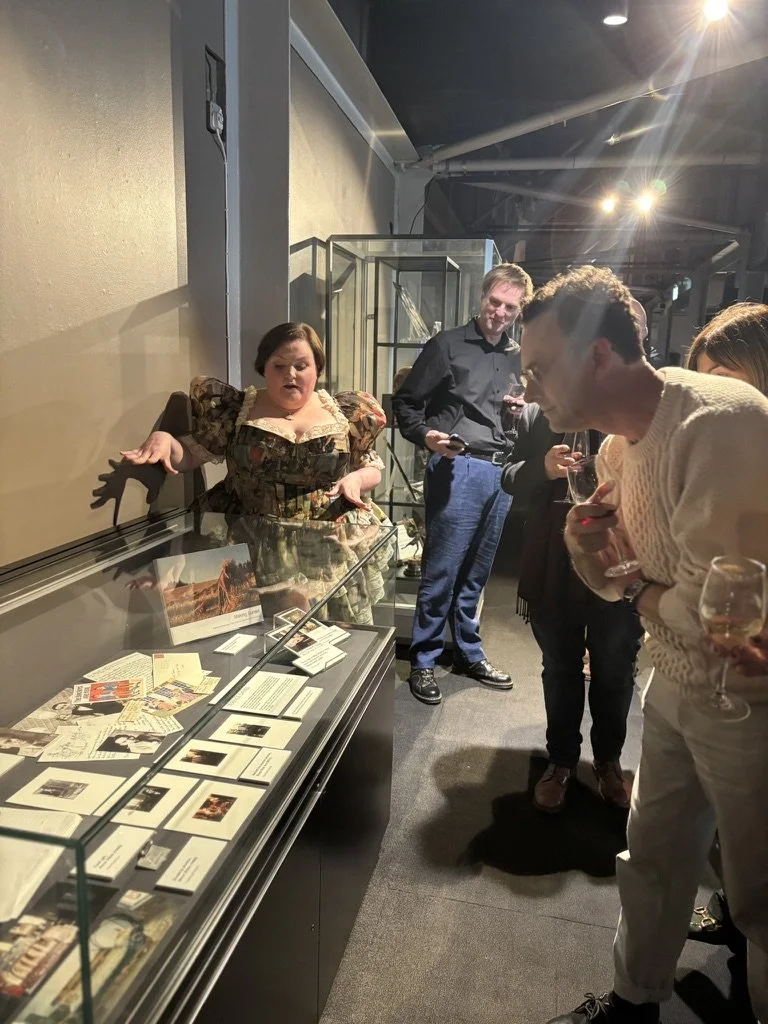
Image 2: Sophie Smith guiding a private view tour of the BFI Exhibition, Dear Bud: The Creative Mind of Terence Davies, October 2025. Photo: Saskia Wong
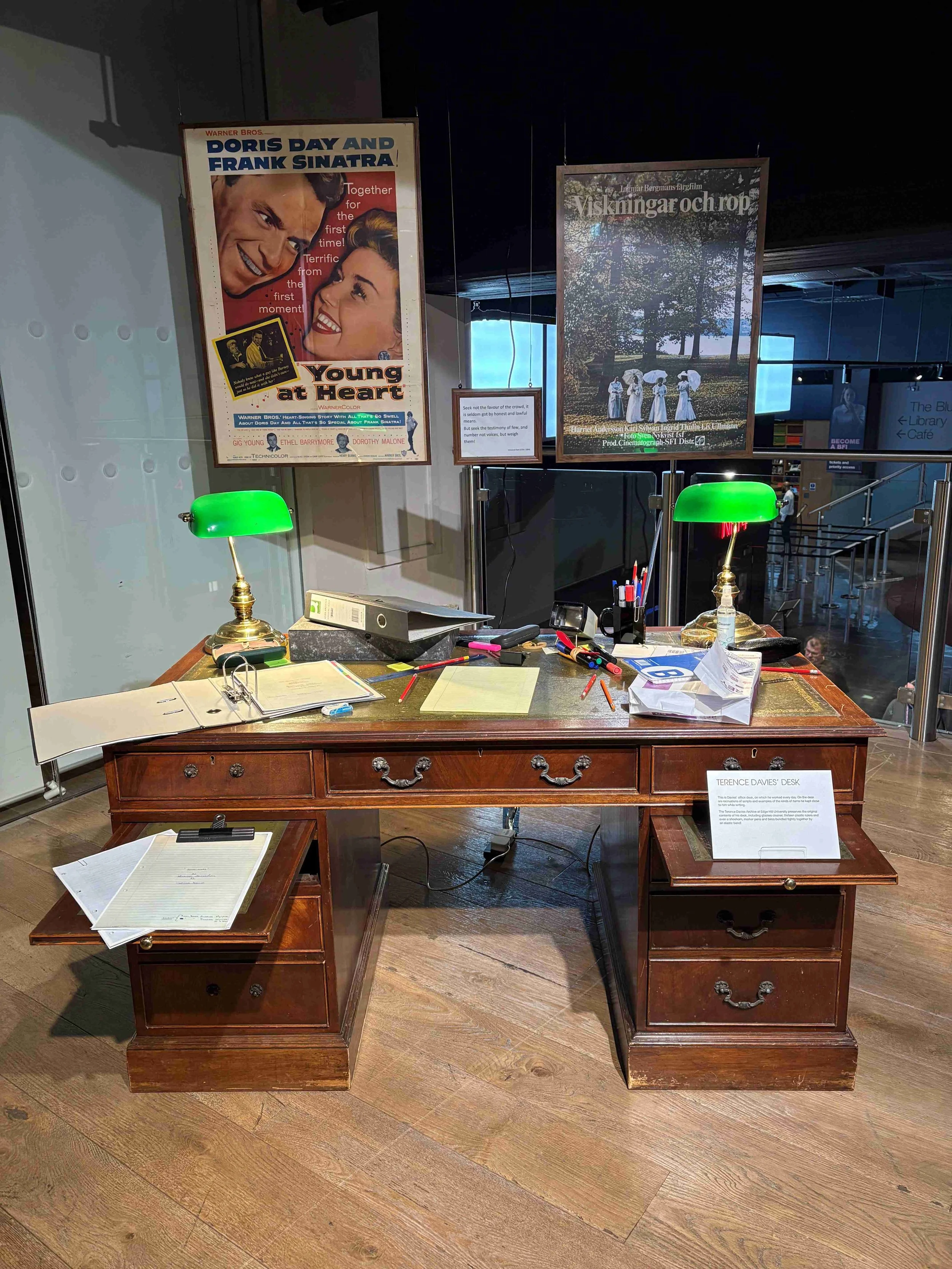
Image 3: Terence Davies’s desk at the BFI, London, October 2025. Photo: Dan Copley
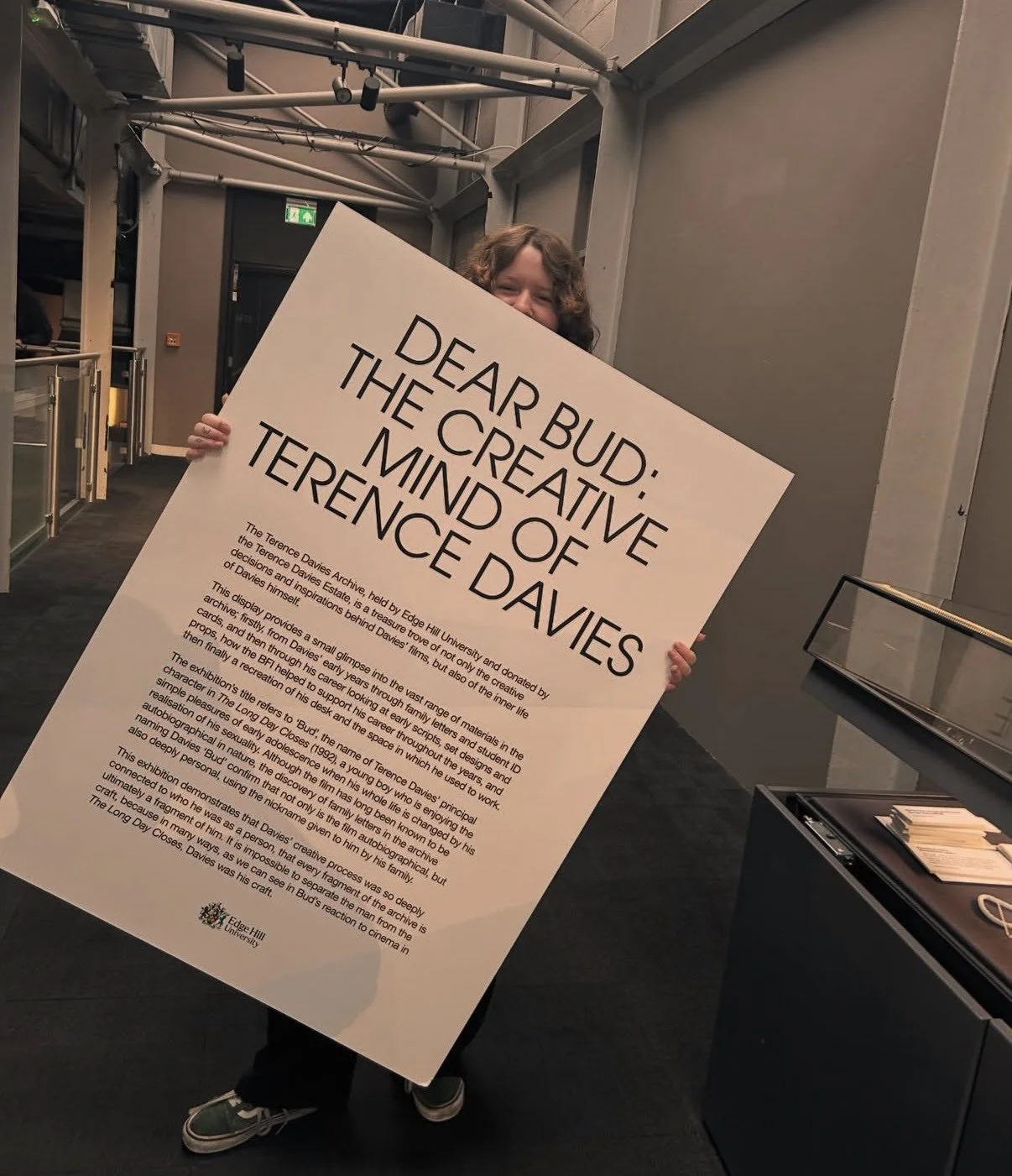
Image 4: Aimy Stevens taking down the Dear Bud exhibition at the BFI, Southbank, London, December 2025. Photo: Sophie Smith

Image 5: John Taylor (Terence Davies Estate), Dan Copley, Sophie Smith and Rachel Hayward (Head of Film Strategy, HOME) speaking at HOME, Manchester, November 2025. Photo: Laura Norton-Hand
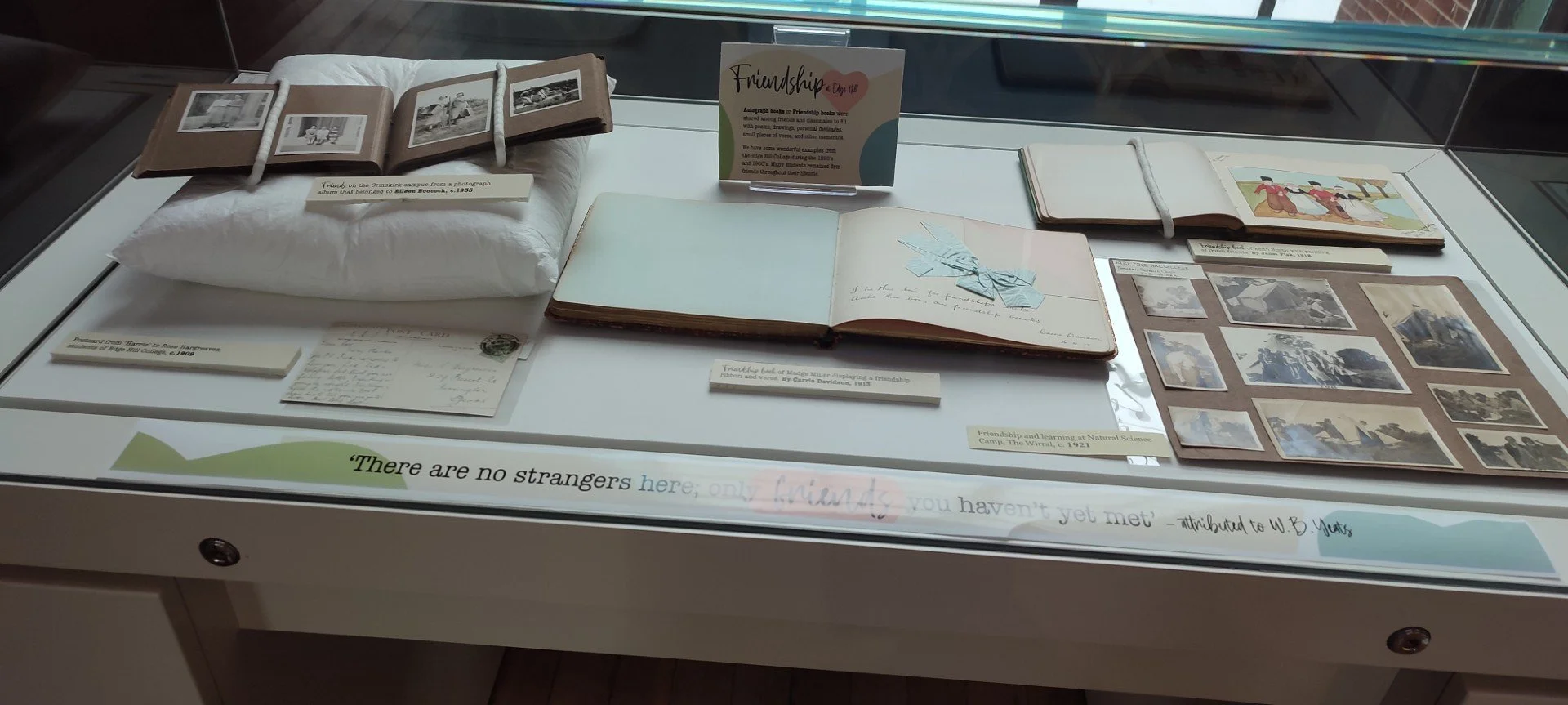
Image 6: Display on ‘Friendship’ that drew on research into the lives of Edge Hill’s earliest students, February 2026. Curated by Rachel Bird and Dee McMahon. Photo: Dee McMahon
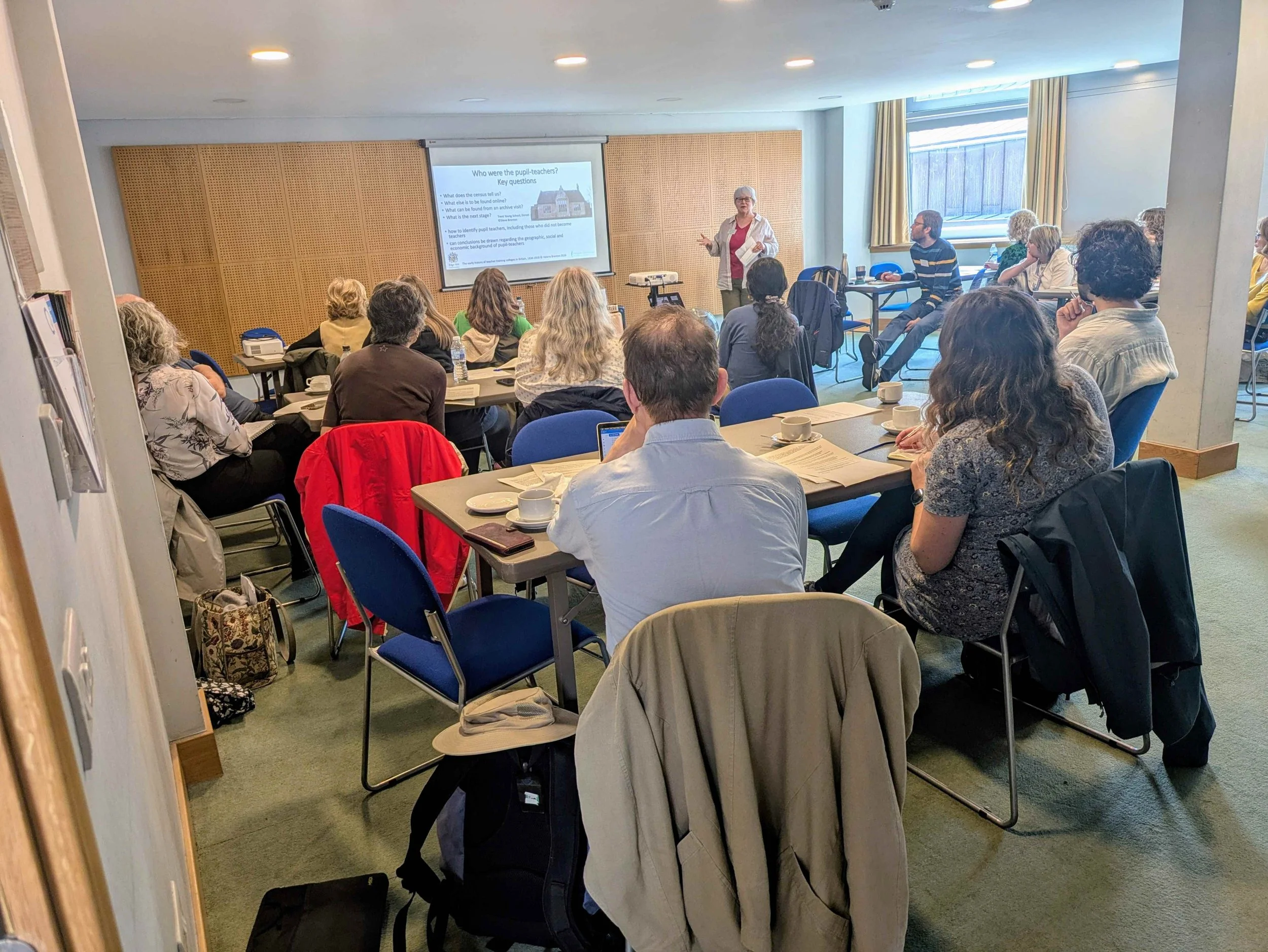
Image 7: Historic Teacher Training Colleges Symposium, Liverpool, June 2026. Photo: Alyson Brown