
#CrowdCymru - digital volunteering with the archives of Wales
Jennifer Evans , Digital Volunteering Project Officer for #CrowdCymru contributes this guest blog for the ARA Website:
#CrowdCymru - digital volunteering with the archives of Wales
Phew, what a difference a few years make!
I last contributed to this blog back in 2023 [read it here] when our project was nearing the end of its first year. Our project started with funding from the National Lottery Heritage Fund in the wake of the pandemic and an urgent need to modernise archive services whilst also empowering people with new digital skills to digitally connect across different communities.
Launched as a working partnership between Cardiff University Special Collections & Archives, Glamorgan Archives, Gwent Archives and the National Library Wales, the initial project partners have now been joined by Bangor University Archives and Special Collections, Carmarthenshire Archives, Conwy Archives, Swansea University Libraries & Archives and University of Wales Trinity St Davids Special Collections and Archives
This new phase of the project is generously funded by Welsh Government and our volunteers (over 100 people from across Wales and the world!) continue their diligent work, working online to transcribe and tag historical documents and photographs to improve future access to digital collections via a bi-lingual online platform developed by the National Library Wales.
Image 1. #CC project partner logos
Here are some highlights of the more recent collections put forward by the partners, beginning with the Rolls Family Archive from Gwent Archives. This magnificent collection includes a number of holiday diaries written by British socialite, Georgiana Marcia Rolls, or Lady Llangattock [1837-1923]. Georgiana was well known for her philanthropic and social interests, and for promoting the role of women in society and, of course, for her youngest son, Charles, a co-founder of the Rolls-Royce Company and the first person to fly the English Channel in both directions. Georgiana’s diaries have been incredibly popular with the volunteers, not least for her wonderful handwriting, beautiful illustrations and her good-natured commentary on holiday adventures, sailing around Europe in the family yacht, the ‘Fair Flirt’. The collection also contains a fascinating recipe book compiled back in 1828 by the family cook, Mary Long, that includes much more than recipes for meals! Here we find recipes for tooth powder, a cure for heartburn and guidelines to treat Cholera Morbus.

Image 2. Georgiana Marcia Maclean diary, 1886, from the Rolls Family Archive (held at Gwent Archives)
This next collection from Swansea University Libraries & Archives, couldn’t be more different. Here we have a notebook written by Welsh miner, councillor and a prominent member of the Welsh Communist Party, John Roberts [1899-1979], or ‘Jack Russia’, whilst attending the International Brigade Officers' Training School in Tarrazona, Spain in 1937. It comes from the South Wales Coalfield Collection, held at Swansea University’s Richard Burton Archives, which contains significant material relating to the Spanish Civil War and the part played by Welsh volunteers. This particular notebook contains detailed notes, sketches and diagrams about weapons, warfare and tactics written up in 1937, during the Spanish Civil War.

Image 3. Notebook by Jack Roberts whilst at the International Brigade Officers' Training School, Spain, 1937 [held at Swansea University and Archives]
Glamorgan Archives have put forward their first collection to contain Welsh language handwritten material for their volunteers to transcribe; it consists of a selection of insightful scrapbooks compiled by Ysgol Rhydfelen, the first Welsh comprehensive school to open in south Wales and the third of its kind in Wales. The school opened its doors in 1962 to educate pupils through the medium of Welsh, with 80 pupils, three full time teachers and four part time teachers. The delightful scrapbooks, dating from 1962 to 1980, contain newspaper cuttings, photographs, flyers and tickets about school events and even a series of Christmas cards designed by pupils. Glamorgan Archives put out a call for ex-pupils to sign-up to transcribe the collection, in the hope they could also identify former classmates in old photographs in these yellowing newspaper cuttings.

Image 4. Pages from an Ysgol Gyfun Rhydfelen scrapbook 1962-4 (collection held at Glamorgan Archives)
Cardiff University Special Collections & Archives contributed a wonderful collection of early handwritten student magazines covering the period 1885 to 1888. These unique volumes are full of fun and whimsey whilst giving us a fascinating insight into late 19th century student life in Wales. Each edition begins with a humorous editorial and plenty of articles on all manner of topics, poetry, reports on group outings and even hypothetical journeys, all accompanied by intricate sketches and photographs.
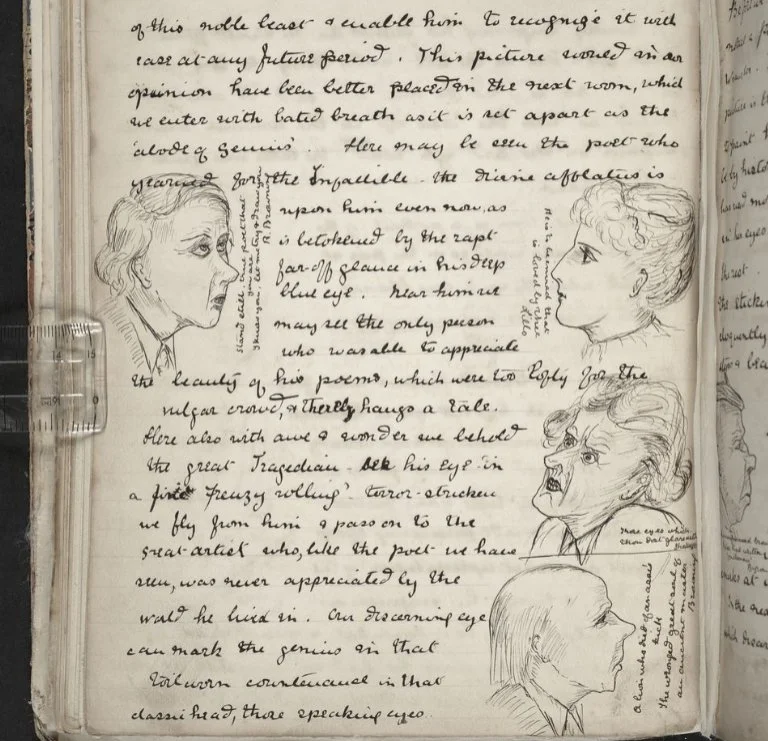
Image 5. University College Magazine, Jan 1888 [held at Cardiff University Special Collections and Archives]
Other collections currently being tackled by our volunteers include an early 20th century photographic collection of atmospheric images of south Wales taken as a basis for postcards and a 19th century Logbook of St David's College, Lampeter (the oldest degree awarding institution in Wales, now University of Wales Trinity Saint David). However, one particular collection of early minute books from a south Wales Women’s Institute group led to our discovery of a very interesting character who, with a bit of detective work, was subsequently found to be recorded in two other archive repositories, both helping us to learn more about her.
Blanche Baker-Gabb became known to us via her sterling work that’s documented across the pages of early Llanwenarth Women’s Institute Minute Books held by Gwent Archives. The volunteers loved transcribing these books as they opened a vivid window into a past world devoid of the overwhelm and immediacy that modern technology has landed on us today. A little bit of research brought to light the Baker-Gabb family archive held at the National Library Wales, this archive includes two volumes of handwritten meteorological (thermometer, barometer, and rain gauge) readings recorded at the Baker-Gabb residence, The Chain, in Abergavenny, Monmouthshire, during the period 1881 to 1947. The weather readings appear to have been recorded by Blanche’s older brother, Richard Frederick, as other members of the family are mentioned in the third person. We learn more about Blanche in these registers, as along the bottom of each of the intricately detailed tables is a tiny diary entry recording the daily life of the family. From these excerpts we learn that Blanche, being from an affluent family, was able to enjoy a comfortable, carefree, and vibrant social life visiting London regularly, lunching out with a long list of friends, playing lots of sport and frequent trips abroad.

Image 6. Blanche Baker-Gabb passport photograph 1920 (image courtesy National Library of Wales)
However, there was much more to Blanche than high society living; she was a suffragette, regularly attending meetings and listed as a member in Women’s Suffrage: The Common Cause of Humanity from as early as 1914. She was an active member of many societies including being Secretary of the Abergavenny branch of the Girl’s Friendly Society and regularly attending national society meetings in London. She also sat on the local Eisteddfod committee, and from 1915 onwards, she attended meetings of the British Red Cross, Women on the Land, and the War Agricultural Committee.
Finally, Blanche’s name was found on a remarkable petition along with another 400,000 signatures of Welsh women who pledged to champion everlasting world peace after the horrors of the First World War. The petition was organised by the Welsh League of Nations Union (WLNU) and served as a plea from the women of Wales to the women of America to persuade their US President to join and lead the newly established League of Nations. Women in Wales appealed to America ‘from home to home’ and from ‘hearth to hearth’ in a powerful call for ‘LAW NOT WAR’. This campaign was a remarkable Wales-wide effort involving almost every household, with peace activists going door to door to advocate for new signatures. A Welsh delegation, led by WLNU Chair, Annie Hughes-Griffiths, travelled from Wales to America in March 1924 to formally present the petition and embark on a two month ‘Peace Tour’ of the United States.

Image 7. Blanche Baker-Gabb signature on the Welsh Women’s Peace Petition 1923 (image courtesy National Library of Wales)
Archives are full of characters like Blanche, perhaps unexceptional in the grand scheme of things but whose stories tell us much about the time in which they lived. Here we have an example of archives at their most accessible best, signposting our own journeys through heritage collections and history, to ignite new connections so vital to bring stories together. I have already shared Blanche’s story via a blog post here and gave a talk at the Women’s Archive Wales Conference in Aberystwyth in October 2025.
As Project Officer, my core job is to support our wonderful group of volunteers and to keep them engaged because there are so many other amazing volunteer projects out there! I do this primarily by keeping in touch and sending out a monthly email. I’ll always begin with relevant news, background information on new collections with any updated guidelines, and a list of the outreach activities I may have been up to. I end with a list of links to news items of possible interest – related articles and blog posts to be savoured over a cuppa and a slice of cake.
All new volunteers are offered an online training session and additional refresher sessions if needed. Every now and again, I’ll also hold an online social where I invite our volunteers to gather to chat and get to know each other, wherever we are based in Wales or the world. This can be an important activity as many volunteers, when asked what they’d like to get out of digital volunteering, tick the “to meet new people” option. These sessions are also important for me personally as I largely work from home and my regular daily human interactions are pretty limited!
Another popular activity has been One Minute Wonders, where our volunteers were invited to select their favourite document, and write a short piece to tell us why. This activity was inspired by the One Minute Wonders display of art in Brighton Museum & Art Gallery, where each artwork links to a story written by a volunteer. We ran this activity back in 2023 and as it was so popular we ran it again a few months ago; these lovely submissions have been uploaded onto the project’s digital platform.
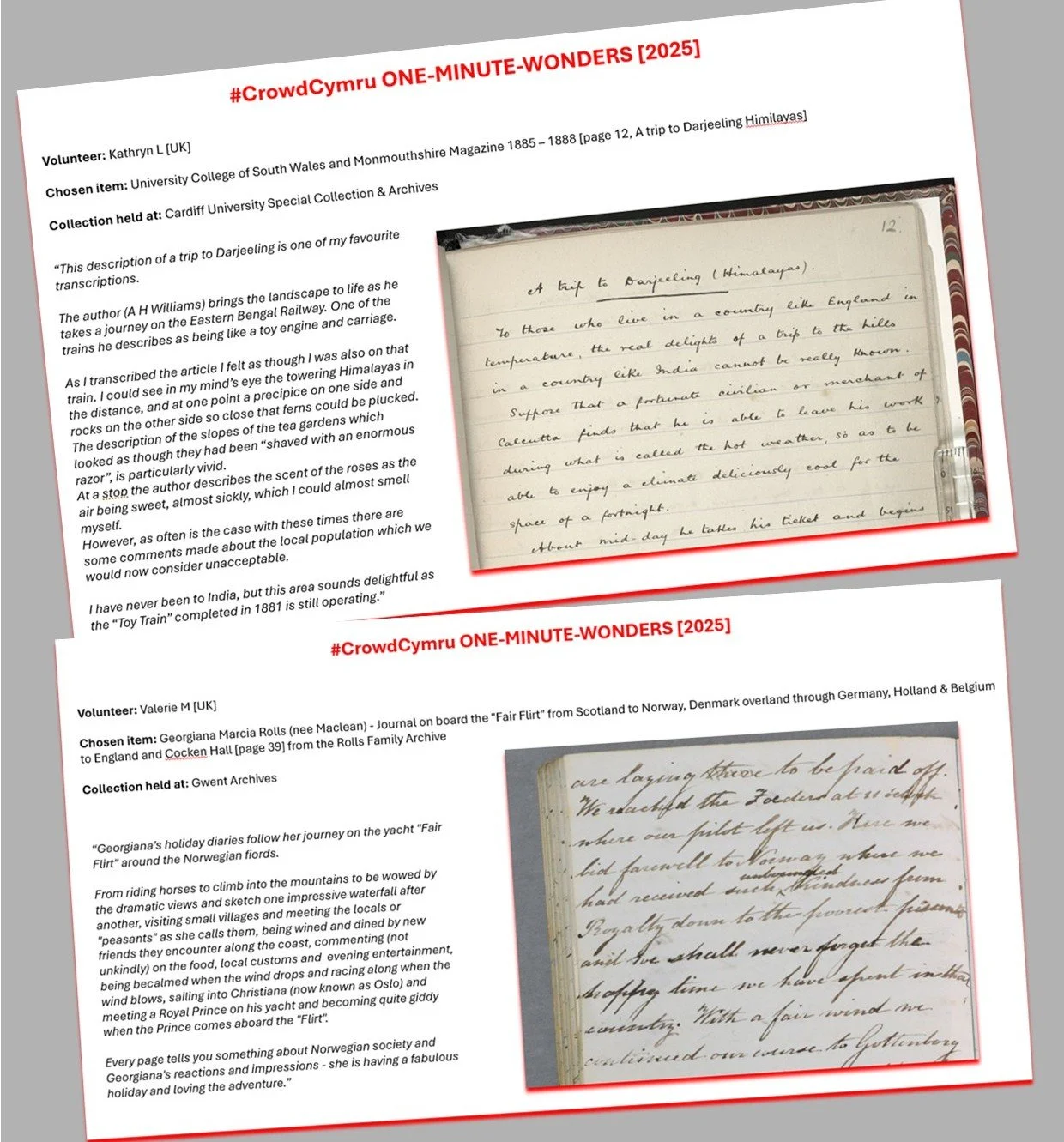
Image 8. #Crowd Cymru One Minute Wonder submissions
Over the past few years, we have endeavoured to keep our profile visible via social media, recently moving from X to Bluesky, guest posting on blogs including this one for the WCVA, and old school in-person engagement, presenting to interested community groups and events because there’s nothing quite like connecting with a room full of people, bouncing ideas of each other and delighting in a shared interest.
We also believe in sharing knowledge and best practice and have to date published two project reports, the first was published at the end of our NLHF phase and the second was recently published after our first year of Welsh Government funding – both can be found on our project website here: #CrowdCymru | Gwent Archives
So, what does the future hold? Hopefully lots of exciting things! Our current funding phase comes to an end in March 2026, but we have high hopes of obtaining further funding – watch this space!
As mentioned previously, we are now a growing partnership of nine institutions bursting with fascinating collections to share with Wales and the world – our core aim has always been to improve collection descriptions, amplify access to digital collections and ignite new research today and in the future: while in turn, improving the knowledge of the vast collections of the partner organisations. And what better way to achieve these aims than an exciting new collaboration between #CrowdCymru and People's Collection Wales, the free website dedicated to bringing together Wales's heritage. Established in 2010, they're a small Welsh Government funded team with three leading partner institutions: Amgueddfa Cymru - National Museum Wales, National Library of Wales and the Royal Commission on the Ancient and Historical Monuments of Wales. They are passionate about celebrating and sharing Wales’s culture and heritage , believing that everyone has a piece of the jigsaw that weaves the rich story of Wales - be it a memory, a letter, an old photograph or a sound recording. Their aim is to capture and share these often-untold stories on the website for future generations to enjoy. We are very much looking forward to working with this organisation while continuing to share our own fascinating collections and stories.
If you’d like to join our vibrant team of #CrowdCymru volunteers, or if you’re already part of a community group you think might be interested, please get in touch with me as, I’m eager to come and talk to you and we can run training sessions online or in person.
Jennifer Evans
Digital Volunteering Project Officer
Website: #CrowdCymru | Gwent Archives
Email: jennifer.evans@gwentarchives.gov.uk
Phone 01495 742450
This article titled #CrowdCymru – digital volunteering with the archives of Wales by Jennifer Evans is licensed under a Creative Commons Attribution 4.0 International License