Nomination:
Charlie joined as an Apprentice Archivist in 2023 through The National Archives apprenticeship scheme. From the first day as apprentice, Charlie has shown passion and enthusiasm in her role and demonstrated exceptional progression into a highly capable heritage professional. Since commencing the role she has demonstrated rapid skills development across archival standards and practices, stakeholder engagement, exhibition design, and has taken on roles and responsibilities significantly beyond the expected scope of an apprentice.
As part of our team, she has participated in departmental and University-wide meetings and managed much of the administration for our Senior Manager, making everything available to the team. She has assisted with searchroom duties and projects as her schedule allows. She often goes above and beyond in her work day to accommodate needs of the department, especially during a Voluntary Severance scheme and the following lack of resources and staffing.
The reason I’m nominating Charlie for this award is because of her significant contribution towards the Palace Green Library exhibition space. Alongside fulfilling all requirements of her role and core departmental duties, Charlie has led the full redevelopment of our exhibition gallery space, completing approximately 200 hours of work for this project alone.
The gallery was previously used for Teaching and Learning displays linked to school curriculum using Archival primary sources, called ‘Penned and Printed’. Following the opening of our Shakespeare Revealed exhibition, the space contained a competition exhibition called ‘Binding the Bard’ based on the conservation efforts around Shakespeare’s First Folio, which closed April 2026. Charlie has redefined the space as a permanent, public exhibition venue in the theme of One Durham, exploring the connections between Durham City and the University. The new exhibition opens July 2026.
With minor supervision and some assistance from the ASC department, and with collaboration across University Library Collection departments, Charlie planned and delivered all stages of the redesign, including:
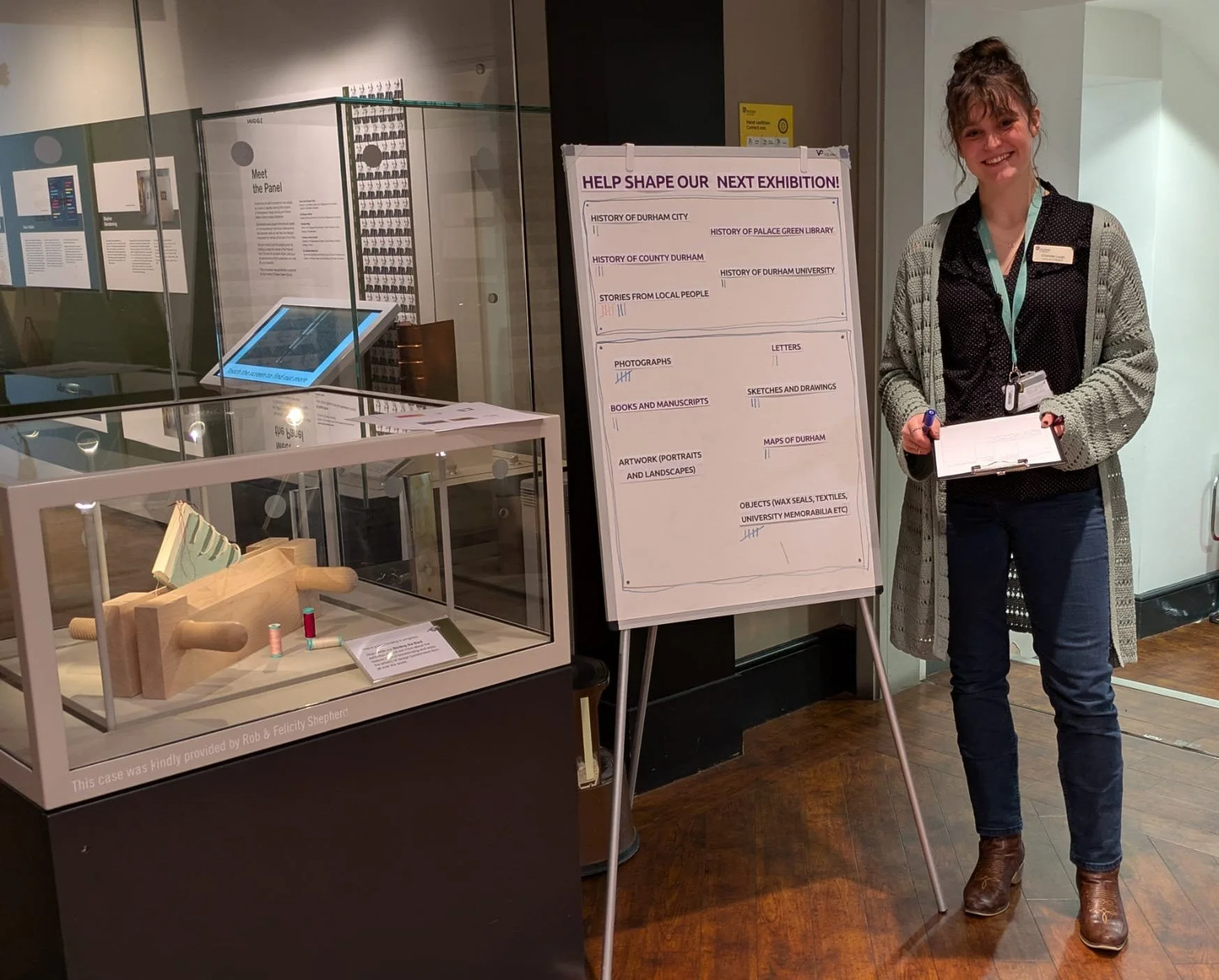
Conducting visitor and stakeholder surveys to inform on interpretation, accessibility, and design/subject priorities.
Undertaking sector research into display and engagement best practices and benchmarking comparable heritage institutions and spaces.
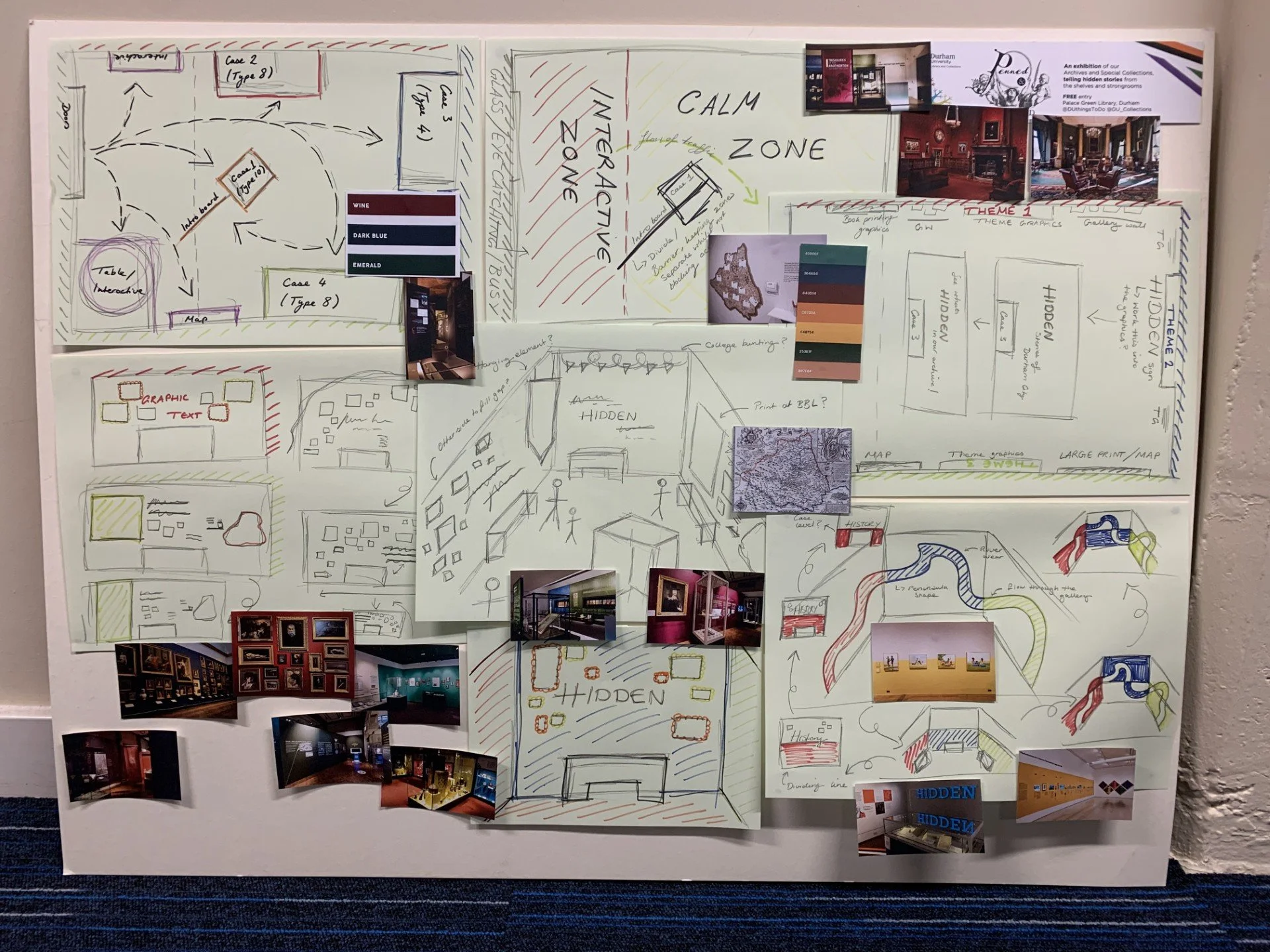
Coordinating floor plans, elevation design, and a long-term exhibition strategy (5-year plan) including object rotation and page-turn schedules and protocols.
Organizing and delivering the design, branding for the space, renamed One Durham, including interpretive graphics
Collaborating with ASC colleagues to select appropriate collection materials, identify copyright and ownership, and work with Conservation to document condition of all materials to be used for the next 5 years.
Establishing student placement opportunities linked to exhibition development and engagement.
Working within a defined budget of approximately £3,000 to commission reusable and cost-effective graphic assets from external graphic designers.
Following sustainability guidelines, reusing exhibition cases and other materials with input from conservation and exhibition staff
Charlie has managed consistent communication with stakeholders, including the University Museum (Oriental Museum), Cathedral, Castle, and Front of House team members to ensure alignment of exhibition themes across Durham heritage sites, hopefully increasing engagement throughout the exhibition life cycle.
Drawing on her knowledge as a resident of Durham County, Charlie identified a noticeable gap between the University community and locals. Using research from The Belonging Report, 2024, from the Equality, Diversity, and Inclusion Fund, Charlie considered the divide between town and University as a priority for engagement with the archive. She addressed this by designing the One Durham exhibition space to:
Emphasise shared local and institutional history, including prominent persons or events
Improve accessibility, including physical navigation and layout and clarifying interpretations
Creating engagement materials and interpretations across a variety of age groups, including elements for children which has been a common theme in our archaeology gallery
Implementing feedback procedures to measure visitor engagement and inform future colleagues on possible improvements
Her work demonstrates a clear shift from being a cold teaching display space to a sustainable, audience-focused exhibition environment with measurable engagement outcomes.
Supporting information:
The attached documents which include the Creative Brief, DU Exhibition Proposal, GanttChart, an image of her Sharepoint site, CILIP Pathways Witness Statement regarding her apprenticeship and an image of Charlie during her in-person consultation outside the Binding the Bard exhibition, and a picture of her vision board regarding the layout and priorities of the exhibition space, below.