
Sustainable Store Refit at Historic Dockyard Chatham
By Alexandra Wade
Background:
The Historic Dockyard Chatham has over 100 buildings and structures, including 48 Scheduled Ancient Monuments. The site is in the stewardship of the independent charity, Chatham Historic Dockyard Trust (No. 292101). The Trust’s dual objectives of education and preservation are achieved by a strategy of preservation through reuse. Some of the buildings are open to visitors; others are occupied by residential tenants, businesses, and tertiary education faculties.
As a fully accredited museum, the Trust collects, preserves, researches and exhibits objects and materials connected with the history of the dockyard and its people. It studies the development of Royal Navy warship design, construction and the use of the River Medway by the Royal Navy. The Historic Dockyard Chatham presents unrivalled status as the most complete and best-preserved dockyard of the Age of Sail anywhere in the world.
The Store:
The Chatham Historic Dockyard Trust has undertaken an ambitious project to transform one of its existing buildings into a “passive” collections store. For the purposes of this paper “passive” means the ability for the store to self-regulate its own environment with minimal input from standalone support units. Following the Trust’s longstanding principle of ‘preservation through re-use’, the new artefact store occupies what was previously a corridor space within the Fitted Rigging House, a 1793 industrial building that is both a Scheduled Ancient Monument and holds Grade I listing status. As the saying goes, the most sustainable building is the building you already have.
Using its in-house teams, the Trust constructed a contained collections store within this underutilised corridor space. Although the area includes an air handling system offering basic air circulation and exchange, the decision was made not to install active environmental controls in the form of a full HVAC system. Instead, after a range of careful testing and RH and temperature mapping of the newly created space, the Trust opted for a passive storage environment.
The room itself (Fig 1) is a mesh of old and new. The two new walls to the rear and left of the store are a fibre gypsum board, brand named Fermacell, offering fire resistance, acoustic performance and impact strength. The original walls of the fitted rigging house are red brick and render with a mineral Keim paint finish. The building is situated on what can be described as a slope. The original front wall section is partially underground with the other three walls open to free-flowing air from the adjacent rooms and corridors. Initially there was a concern about encroaching damp from the rear wall and there had been evidence of hygroscopic salt build up in that area. However, the single underground wall aids in cooling the space keeping the store naturally at a perfect 19 degrees, even with external temperatures over 30 degrees. RH experiences a little fluctuation but within the +/- 10% in 24 hr window and is a little on the drier side, occasionally requiring a small intervention with a humidifier to ensure the space stays within the 50% RH bracket.
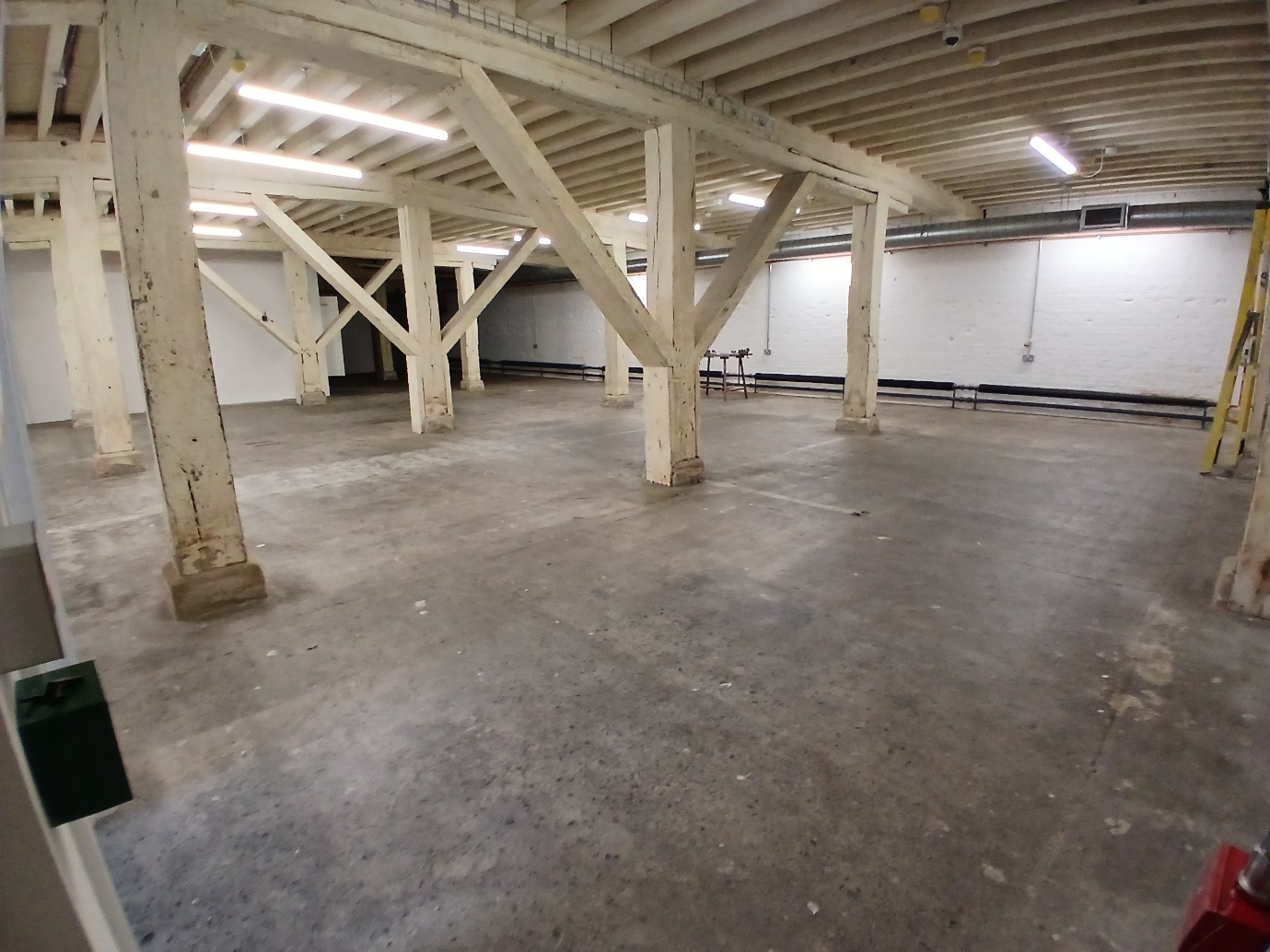
Figure 1
Once construction was complete, the need arose for racking, furniture, packing materials, and general equipment. With collections standards and sustainability in mind, the Trust reached out across several platforms to source surplus and second-hand materials, aiming to keep costs low while giving a second life to equipment that might otherwise have been discarded.
Sourcing Materials:
Finding good quality, conservation standard, second hand materials can be a daunting task. As of March 2026 The Trust has secured:
- 4 runs of back-to-back roller racking
- 20 bays of static shelving
- 10 picture grids
- 3 plan chests
- 200 large archive boxes
- A storage cupboard (Fig 2)
- 1 showcase
- Conservation materials such as: a roll of melinex, a pack of archival card, a selection of mechanical cleaning erasers, a roll of bondia, a microwave, scales, weights etc.
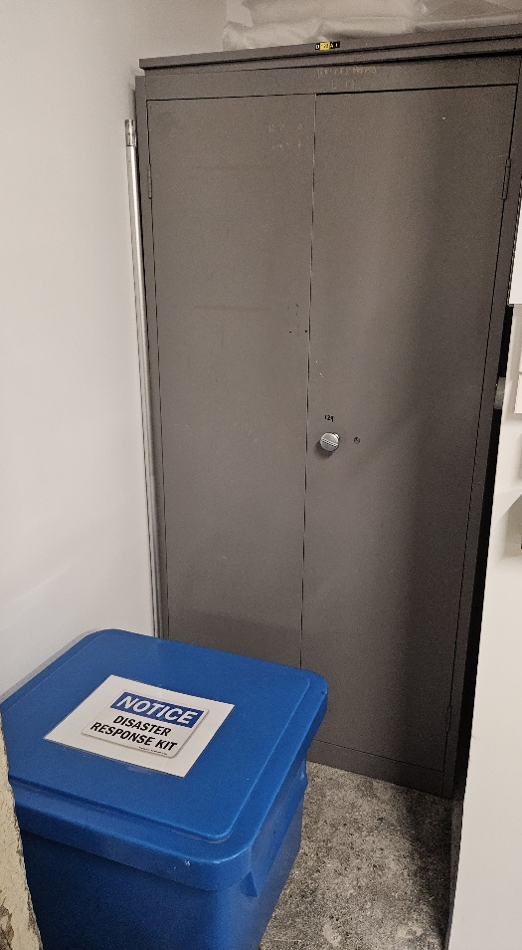
Figure 2
We used a variety of platforms to find second hand materials that were available. If we were looking for something specific, such as racking we put a call out on platforms like Archives Jiscmail or Linkedin. Museum Freecycle proved useful when searching for large, second-hand equipment. We also got in touch with colleagues locally and in our professional network, letting them know that we would be interested in rehoming any materials they were considering throwing away or selling. We secured smaller, conservation specific materials through the kindness of individuals; Instagram give aways from Lorraine Finch (@thecaringconservator) or through word of mouth across peer groups.
Perhaps most importantly we made a connection with Rackline (Fig 3), a heritage sector storage solutions provider. In our initial discussions with the company, we expressed our interest in second hand racking, knowing that the company understood the specific need for Oddy tested and compliant materials whilst having an overview of clients who were asking them to deinstall systems across the country. Through our connection with Rackline we’ve been able to rehome one system and are looking at others on offer.
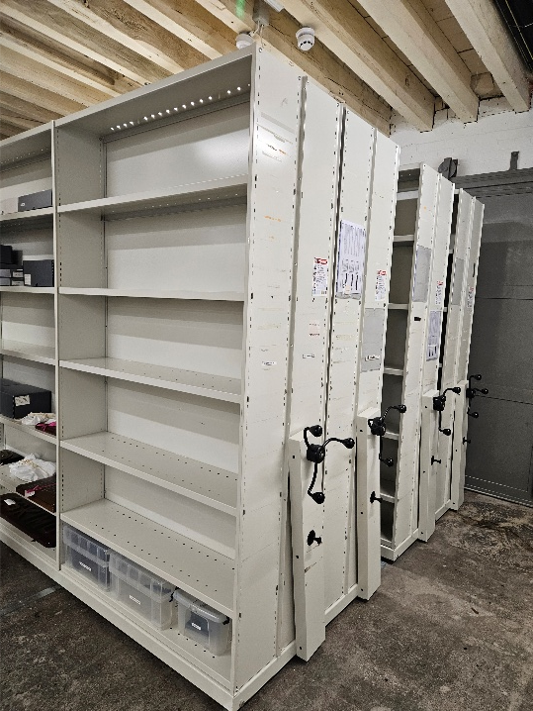
Figure 3
There are several alternatives to the platforms listed above such as:
- The AIC distlist
- Any newsletters that you send out to colleagues, peers.
- Renee Materials (website)
- Warp It
It is important to note that second hand does not always mean free. Whilst we have been lucky to obtain items for “free” there is a cost associated with collecting the items or shipping them to the workplace. Larger objects that have been offered have usually been supplied at a discount rather than for free.
Inhouse reuse:
Where possible we have tried to reuse the materials that we already have on site. Predominately this centres around packaging materials that could be repurposed for another project: cotton tape, boxes, Tyvek wrap are the most common items that we are reusing. We also had a variety of shelving and plan chests already on site, some of which we were able to bring into the new store space. We’ve also been lucky to have strong ties with our colleagues across teams who have been kind enough to donate a range of unused furniture to the project. (Fig 4)
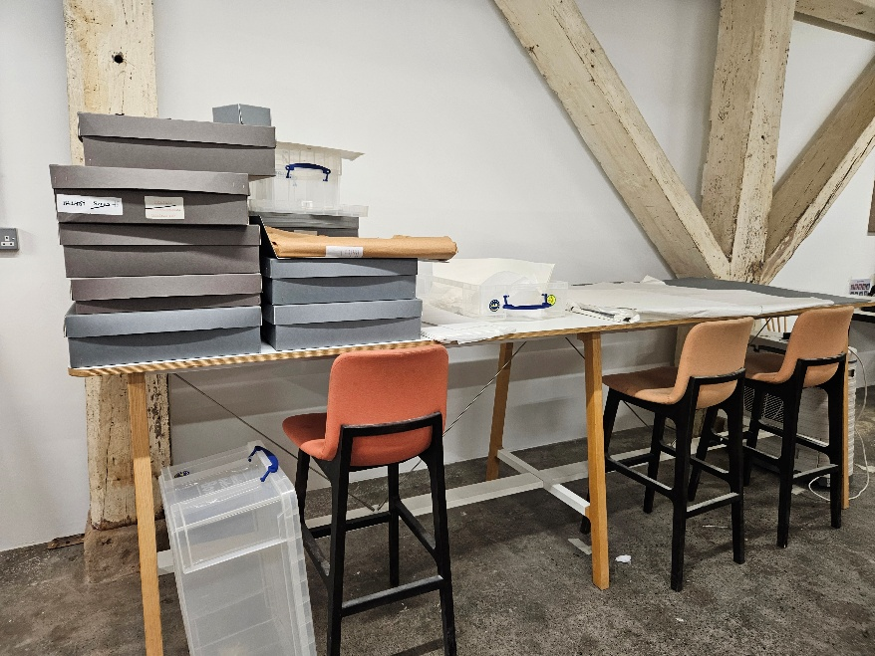
Figure 4
As we audit our materials from our store move, we found items that we no longer needed. We were able to offer some items out to other teams on site, finding homes and second purpose for a wide range of materials and freeing up precious storage space in the process.
It is estimated that approximately 80% of the equipment obtained for the new store has been repurposed, reused, or donated.
Quality checking:
Every intake has been carefully assessed to ensure quality and condition. Packing materials have been checked and quarantined, and shelving and plan chests sterilised to eliminate any potential contamination to the collections. Through conversations with peers, we identified a range of products that we could use to safely sterilise any racking coming into the store.
Most institutions were unable to store space shelving and equipment within their controlled stores and had moved much of their unwanted equipment to unregulated storage. As we were unable to guarantee that materials were not contaminated the quarantine, and decontamination stages were crucial to ensure that nothing unwanted was brought into the store along with our second-hand finds. (Fig 5)
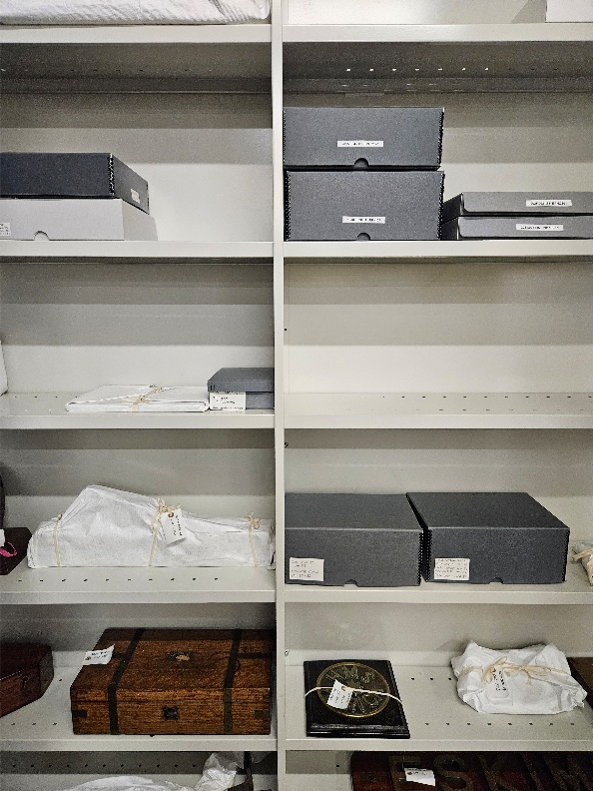
Figure 5
Of course, any electrical items were unable to be used until they had been checked by our Estates teams and PAT tested.
Passive Storage:
Upon setting up the store rigorous testing of the space was undertaken to determine if a full HVAC (heating, ventilation and air conditioning) system was needed to maintain the parameters of the space. Initial wide spectrum testing of a completely empty store was promising. We studied the general environmental readings, spot readings, moisture spot readings of the walls, floor and structural supports, and undertook RH and temperature floor mapping. Whilst some seasonal fluctuation was seen the space performed well as a passive space.
Once some shelving was secured a selection of packaging options were placed in the store:
- Non archival boxes
- Textile clothing bags (Tyvek)
- Very useful boxes (polypropylene)
- Archival card boxes (Fig 6)
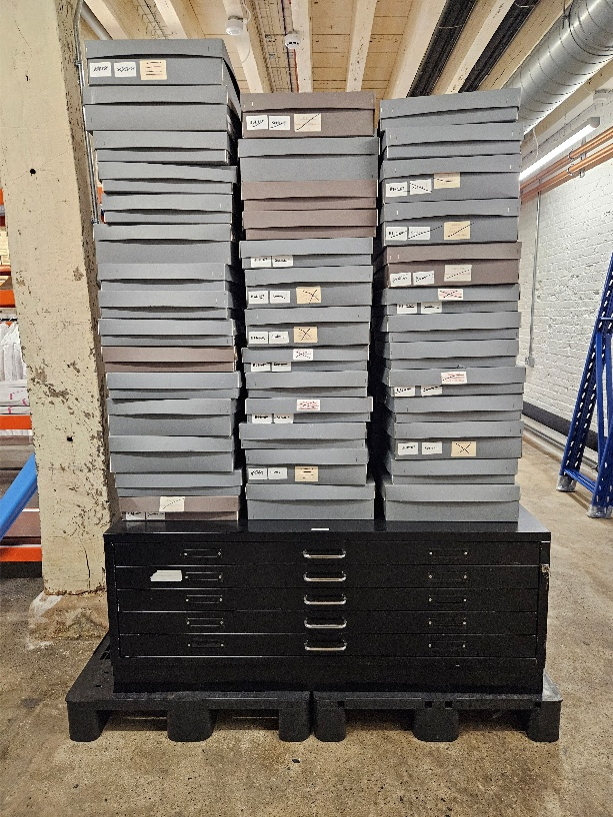
Figure 6
We attempted a range of settings, from densely stacked packaging and solitary boxes on the shelf to boxes with a range of materials and contents density. Tiny tags were placed inside those boxes to ensure the internal microenvironment was well buffered against the store environment. These main steps, amongst other environmental testing told us that the space performed well without the use of a control system.
We did decide to install an AHU (air handling unit) to avoid stagnant air accumulating in the space and provide basic air circulation to the store. This was especially important as staff members would be working in the store periodically.
The store has been operational since January 2025, and we have been through an entire seasonal cycle as of March 2026. As we fill the store with materials, we may find that the environment changes and we need to deploy additional roaming support units but the data as it stands suggests that we may be able to operate a passive store indefinitely. It is also worth mentioning that due to the nature of the building and limitations in our ability to change the physical structure of the space the store does not fully comply with BS 16893:2018.
Challenges:
Perhaps one of the biggest challenges of securing second hand materials is allocating the time to arrange for collection and relocation, especially of large equipment. There is a very fine line between wanting to secure second hand materials and the staff time needed to make the transfer happen. It is down to each individual and institution to determine how much they are prepared to donate to this cause.
We have found that shelving that had been in use by other institutions did not come with its loading information or general specifications. Most of the pieces had been in situ for so long that any documentation had been lost. We, therefore had to spend time attempting to find the original supplier or make an estimate based on the closest product type we could find.
We have already touched on the need for quality control and checking of materials and so far have found no issues, but it is a step that cannot be understated. For anyone trying to replicate this process it is important to recognise the potential for contamination in the space and precautions should be taken as appropriate. It is worth spending some time speaking to your donor to ascertain the quality and current storage environment of the materials and considering where you may store large quantities for processing and checking.
As we experience changes in the overall global climate, we may see more diverse and extreme challenges with our store environments and passive storage may become harder to achieve and more complex to manage. However, we have seen older HVAC units struggling to perform as they should in the extremes of weather we are seeing more often. It is possible that we may have to rethink our approach and become more flexible and diverse in our solutions as the issue of climate change becomes more prominent. (Fig 7)
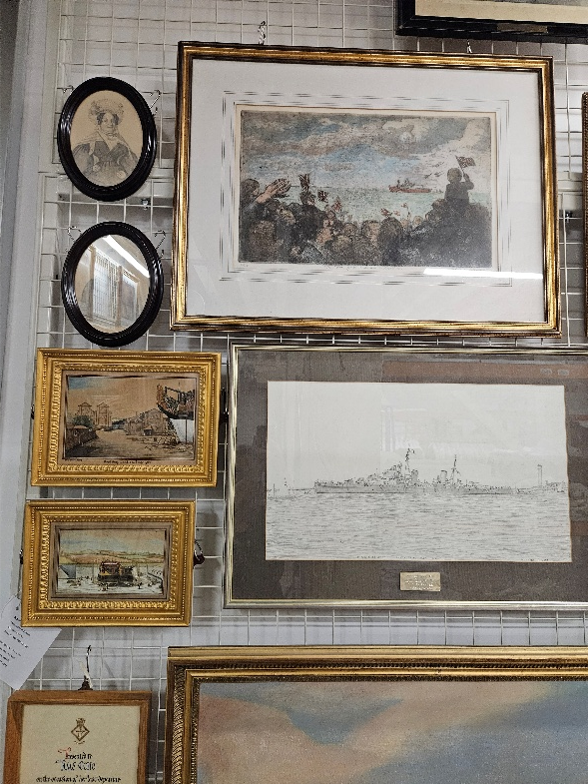
Figure 7
Conclusion:
The stores project is a long way off from completion. We will not see the full impact of our sustainable store premise for many years to come but we hope that as the project expands, we will be able to maintain the 80% reused and repurposed equipment and materials.
In our search for second hand materials that our peers and colleagues were very keen to help us in our efforts. Rehoming equipment and materials became a mutually beneficial transaction, one in that the donor was able to move items on easily and quickly, avoiding the cost of hiring a skip or disposal company. In some instances, some institutions made money through the resell of the materials. Many people gained satisfaction from knowing that their old equipment was going to a good new home, assisting other institutions and colleagues in the process.
Whilst it can be difficult and time consuming to find second hand materials and equipment it is a worthwhile and some would say necessary venture in a society full of items destined for landfill. It quickly became clear that there are very few central places that heritage institutions or professionals can offer and accept donations and it would be interesting to consider the idea of a central sustainable “hub” or “swap shop”. It is worth mentioning that these methods can also reduce the cost burden of putting up a new store and during this time of great economic burden on museums the concept of reuse may be worth considering.
Overall, The Chatham Historic Dockyard Trust is proud to be exploring the concept and realities of a sustainable collections store, and it hopes to serve as inspiration and a springboard for other institutions to take bolder and bigger steps towards their own sustainable initiatives. (Fig 8)
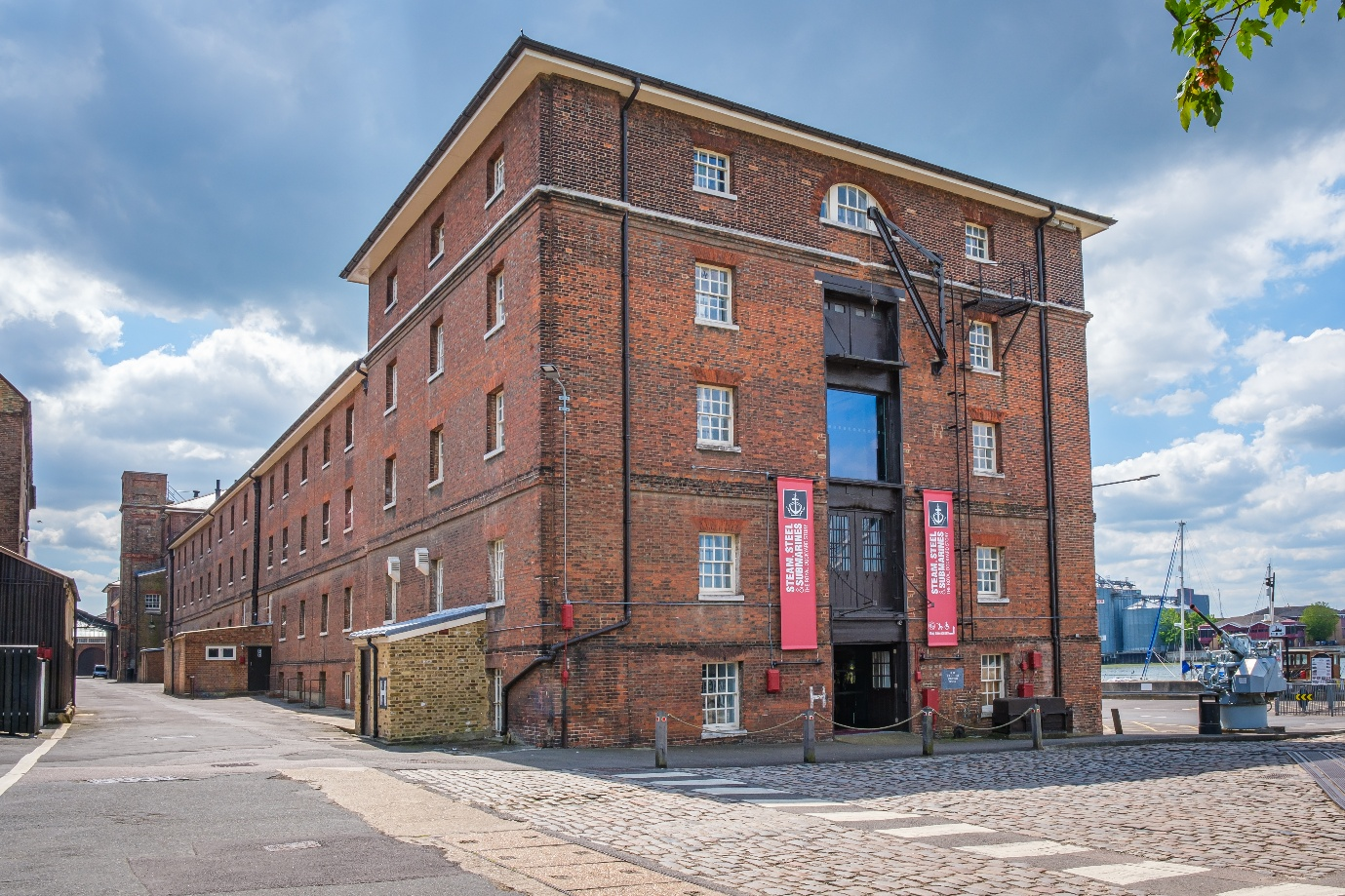
Figure 8